Storm & Wind Damage Roof Repair
Storm & Wind Damage
What wind actually does to a roof
Wind doesn't usually tear a roof off in one dramatic piece. It lifts the leading edge of shingles, creases them back and forth at the tab, and cracks the seal strip that holds them down. A shingle can lift, bend, and settle back into place looking almost normal — while the crease and the broken seal have already done the damage.
That creased shingle will fail. The crack in the mat and the broken seal mean water gets under it on the next rain, and the shingle is more likely to blow off entirely in the next wind. The damage is real and lasting, even when it's invisible from the ground.
Why the damage is often not visible from the ground
From the ground you can see a missing shingle or a gap in the ridge cap. You cannot see a creased tab, a broken seal strip, a lifted edge that settled back down, or flashing that's been bent up and away from a chimney or wall. Those are the most common wind failures, and they all require getting on the roof to identify.
This is why so many storm-damaged roofs get missed. The homeowner looks up, sees what appears to be an intact roof, and assumes it weathered the storm. Months later a shingle blows off or a leak appears, and the connection to the storm is no longer obvious. A short inspection after the storm catches it while the cause is clear.
Lifted and creased shingles, missing ridge cap, damaged flashing
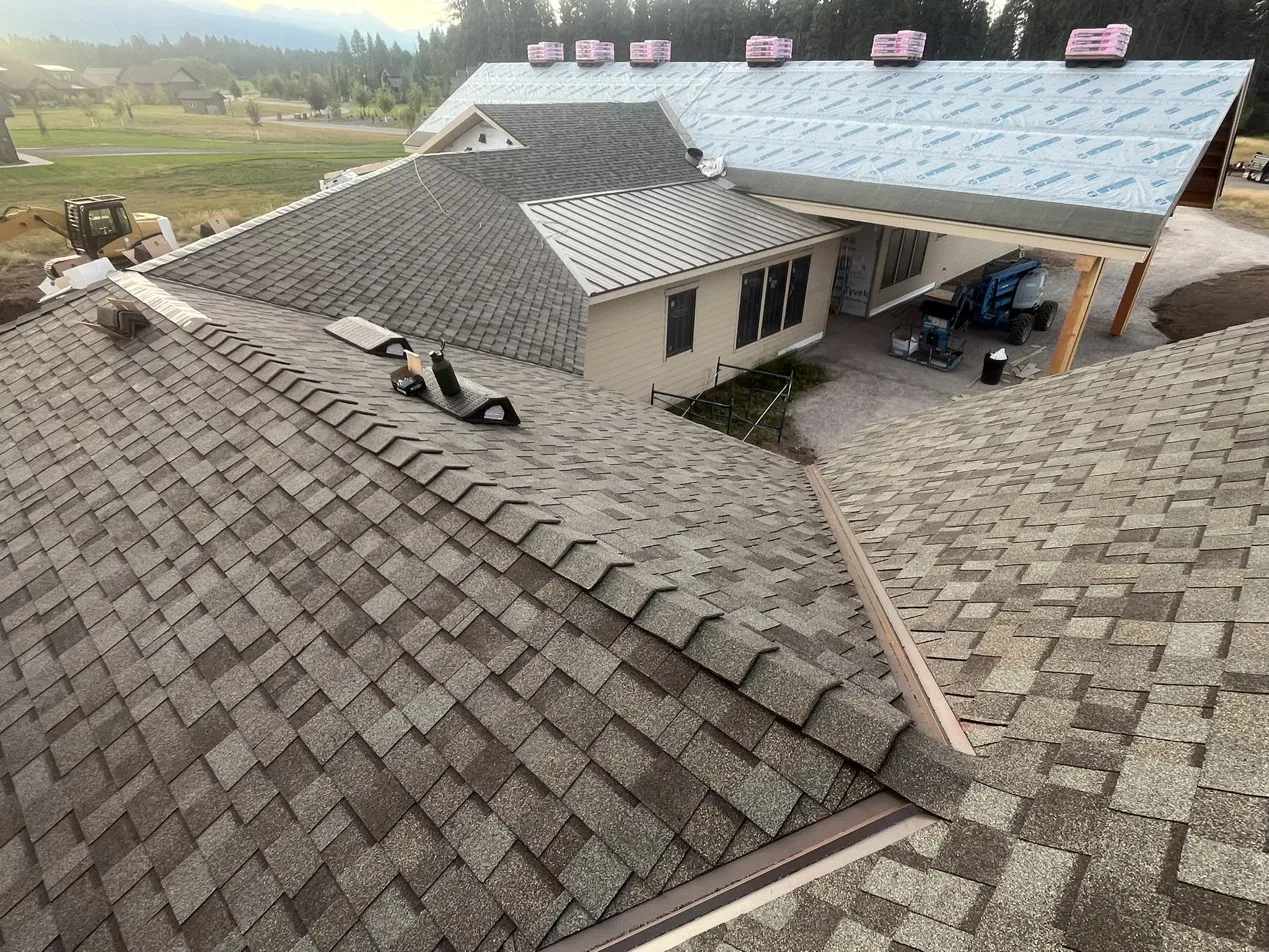
The specific failures we look for after a wind event are lifted and creased shingles — the tab bent back and forth with a visible crease line and a broken seal; missing or displaced ridge cap at the peak; and damaged or lifted flashing at chimneys, valleys, walls, and penetrations where wind got underneath and bent the metal up.
Each of these is repairable when the rest of the roof is sound, and each is a clear, documented failure that an insurer will recognize. We identify every one on every slope, not just the side that faces the wind.
What to do immediately after a storm
If water is coming in, contain it inside with buckets and tarps if you can do it safely, and call us. Do not climb on a wet or storm-damaged roof yourself — that's how people get hurt. Take photos of anything visible from the ground: missing shingles, debris on the roof or in the yard, damage to gutters or vents.
Then get a documented inspection before you contact your insurer. Knowing what you're actually dealing with — before you file — makes the whole process clearer and keeps damage from being missed or understated.
Our office hours are Monday through Friday, 8 AM to 5 PM. If you have water coming into your home, call us anyway — nights and weekends included. After hours you'll reach voicemail, and we return those calls as soon as we can.
Why a documented inspection matters before contacting an insurer
An insurer works from what's documented. A thorough, dated inspection gives you a clear record of the damage — what's lifted, what's creased, what's missing, what flashing is bent or compromised — supported by photos and a written summary. That record is what supports an accurate claim.
Filing without it leaves you guessing. It can mean damage gets missed, or gets understated, or gets attributed to something other than the storm. We document what we find so you walk into the claim knowing exactly what happened to your roof. For how that claim process works, see our insurance claim assistance page.
What the inspection covers
We get on the roof and check every slope, not just the side that faced the wind. We look for lifted and creased shingles, missing or displaced ridge cap, damaged or lifted flashing at chimneys, valleys, walls, and penetrations, loose boots and sealant, and the condition of the decking where we can see it.
We document what we find with photos and a written summary you can use when you talk to your insurer. You'll see what we saw and understand what it means. Estimates are free.
Frequently asked
Why is storm damage often not visible from the ground?
Wind doesn't usually tear a roof off in one piece. It lifts shingles, creases them back and forth at the tab, and cracks the seal strip — and the shingle may settle back down looking mostly fine from the ground. The damage is in the crease and the broken seal, which you can only see up close. Missing ridge cap and bent or lifted flashing are easier to spot but still easy to miss from the ground.
What should I do right after a storm?
If water is coming in, contain it inside with buckets and tarps if you can do it safely, and call us. Don't climb on a wet or storm-damaged roof yourself. Take photos of anything you can see from the ground — missing shingles, debris, damage to the yard. Then get a documented inspection before you contact your insurer, so you know what you're actually dealing with.
Why does a documented inspection matter before I call my insurer?
Because an insurer works from what's documented. A thorough inspection gives you a clear, dated record of the damage — what's lifted, what's creased, what's missing, what flashing is bent or compromised. That record is what supports an accurate claim. Filing without it leaves you guessing, and it can mean damage gets missed or understated.
What does the storm-damage inspection cover?
We get on the roof and check every slope: lifted and creased shingles, missing or displaced ridge cap, damaged or lifted flashing at chimneys, valleys, walls, and penetrations, loose boots and sealant, and the condition of the decking where we can see it. We document what we find with photos and a written summary you can use when you talk to your insurer.
My roof looks fine after the wind. Do I still need an inspection?
It's worth one. The most common wind damage — lifted and creased shingles with a broken seal — often isn't visible from the ground, and a shingle that's been creased back and forth will fail later even if it looks okay now. A short inspection tells you whether the roof actually weathered the storm or whether there's damage you can't see yet.
Can you help with the insurance claim?
Yes. We document the damage thoroughly and walk you through what we found, so you have a clear record to bring to your insurer. See our insurance claim assistance page for how that process works.
Where we work
Serving the Flathead Valley
From Kalispell to West Glacier. Pan and zoom to see your town.
Free estimate
Let's look at your roof
Send a few details and we'll get back to you during office hours. You'll talk to Tessa & Joseph Stremel — not a salesperson. Free estimates, no obligation.
Prefer to call?
(406) 260-5284