Asphalt Shingle Roof Replacement
Roof Replacement
When to repair and when to replace
Your shingle roof is worth repairing when the problem is isolated — a few wind-lifted shingles, a cracked plumbing boot, or a section of flashing that's pulled away. If the surrounding shingles are still flexible and the decking underneath is solid, a targeted repair buys you years. There's no reason to replace a sound roof over one bad spot.
Replacement becomes the honest call when the shingles are brittle and cracking across the roof, when granules are washing into the gutters in volume, when the roof is near the end of its expected life, or when the decking has gone soft. We get on the roof, look at the condition, and tell you which one makes sense for your situation. We'd rather recommend the solution that's right for your roof than the bigger job.
Request a quote and we'll tell you straight which one your roof needs.
What a tear-off involves and why it matters
A tear-off means we remove the old shingles down to the wood decking and start clean. It's slower and messier than roofing over the existing layer, and it's the only honest way to replace a roof. Roofing over old shingles hides what's underneath — and in this climate, what's underneath is often the part that matters most.
During the tear-off we protect your landscaping, keep the site tidy, and haul the old material away. The deck gets exposed, inspected, and repaired as needed before anything new goes on. You can't build a roof that lasts on top of a deck you never looked at.
That clean starting point is what the rest of the job depends on.
What gets found under old shingles in this climate
The Flathead Valley freezes hard, snows heavy, and thaws slowly. Over years of that cycle, moisture that worked its way under aging shingles can reach the decking and start to rot it. Soft spots, delaminated plywood, and plank decking with gaps are common finds once the old roof is off.
None of that is visible from the surface, and it only shows up during a tear-off — which is exactly why we do one. Finding it early and replacing the affected decking is straightforward. Leaving it hidden under a new roof turns a small repair into a future failure.
This is the part of the job that saves you from a surprise later.
Decking replacement
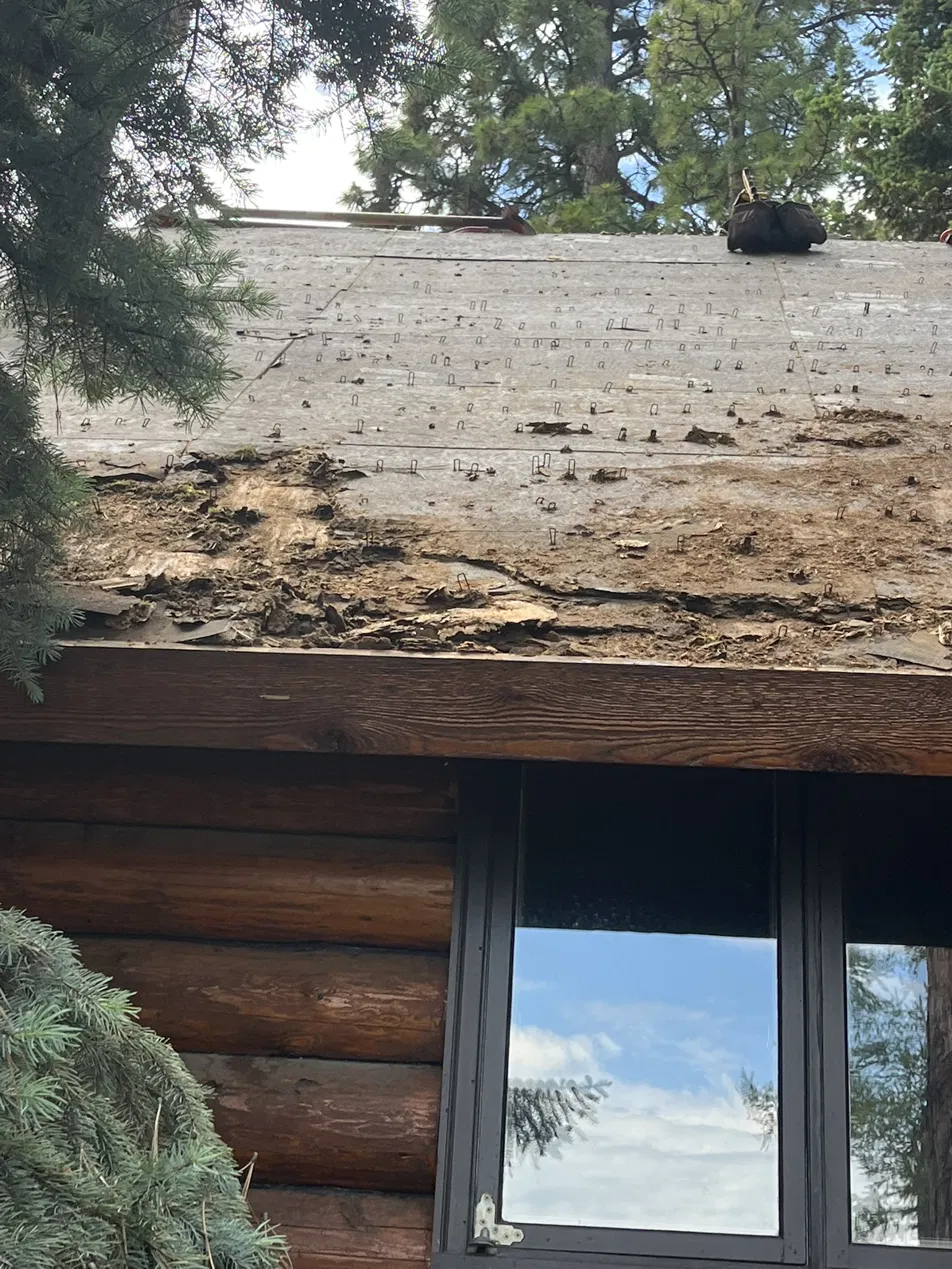
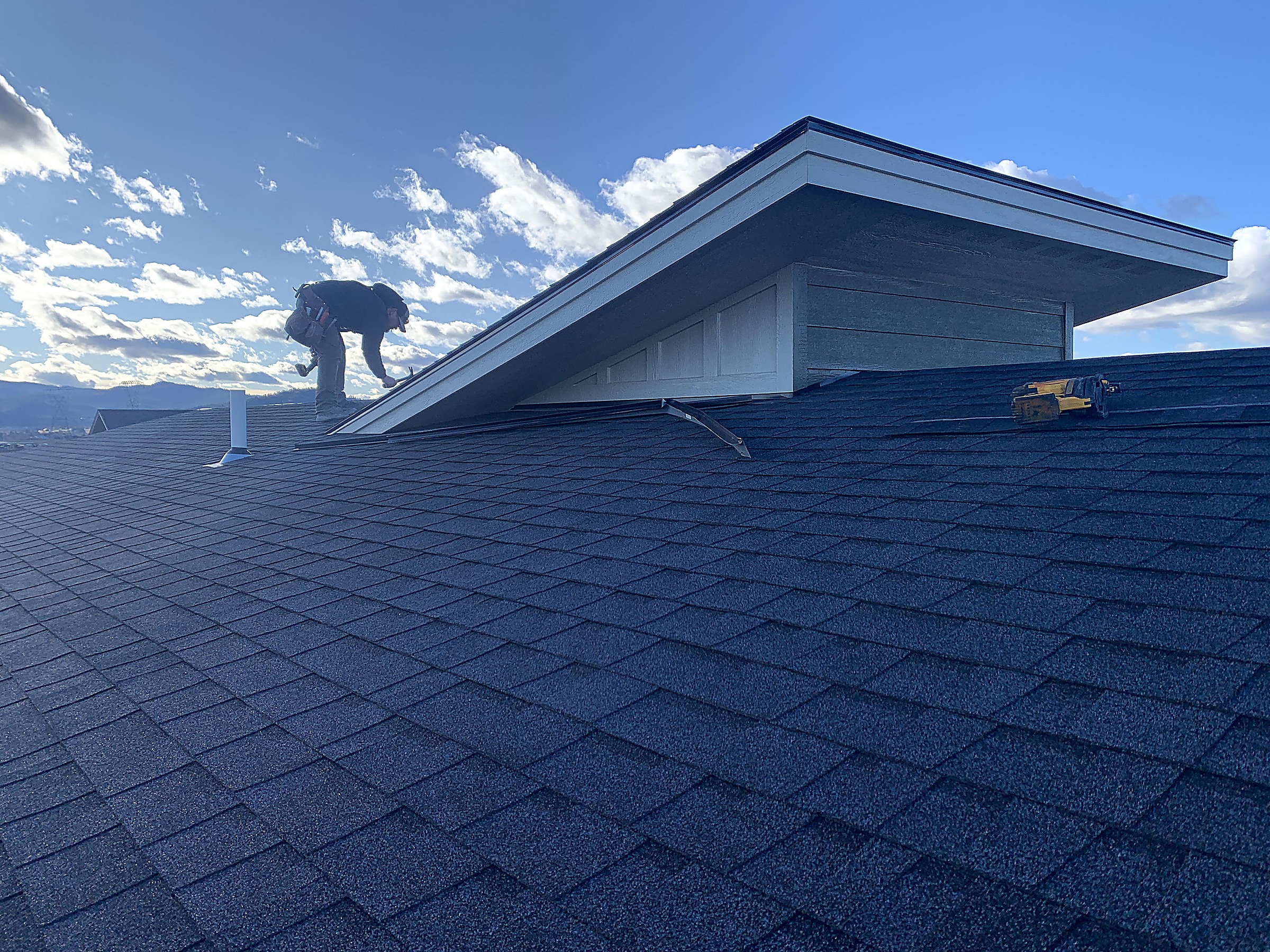
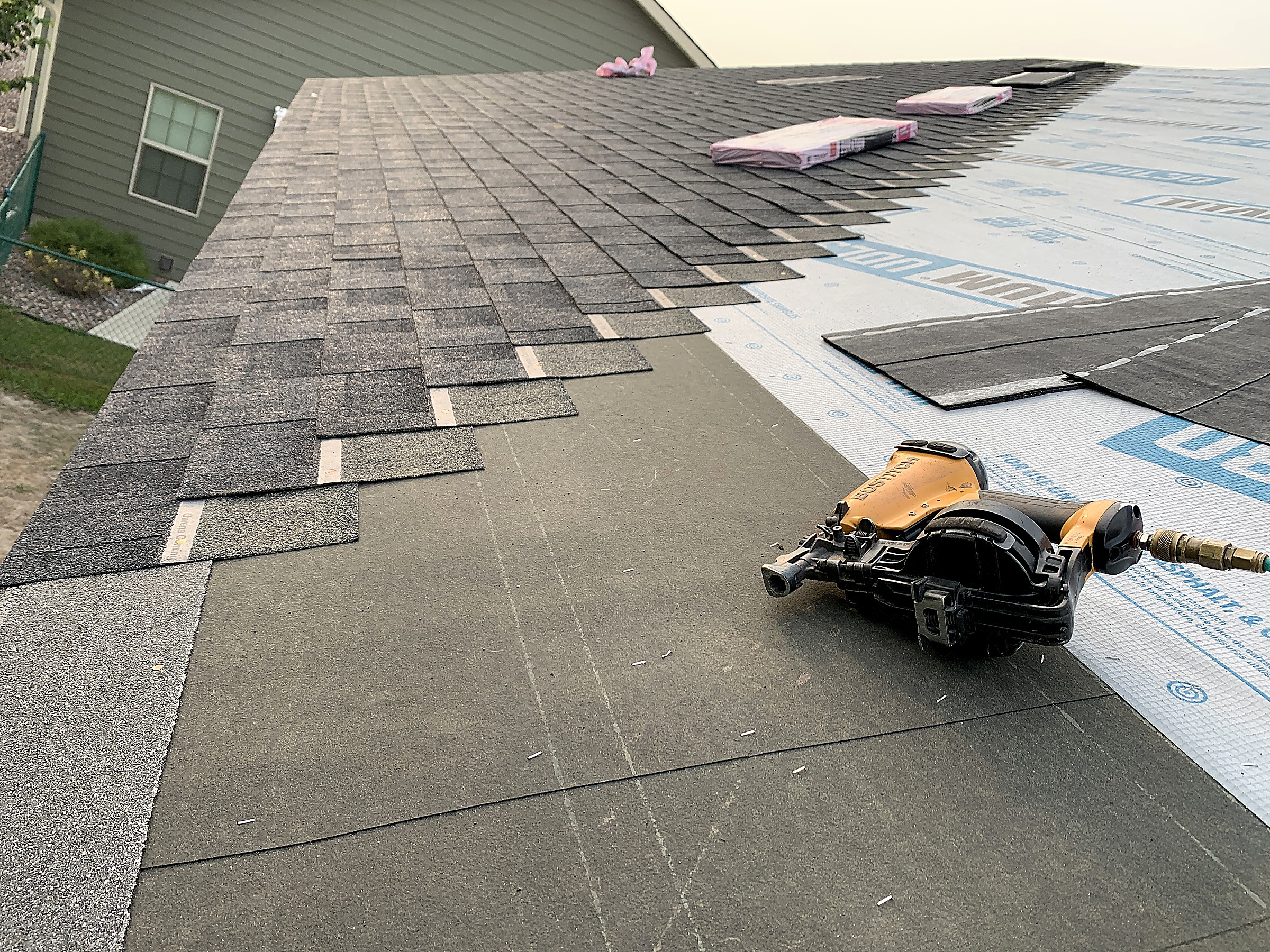
When we find soft, rotted, or delaminated decking, we cut it out and replace it with solid material so the new roof has a sound surface to fasten to. Shingles, underlayment, and flashing all depend on a firm, flat deck. A roof is only as good as what's under it.
We show you what we found and what we replaced. There's no guessing about what's holding up your roof.
You'll see the condition of the deck before we cover it back up.
Underlayment and ice barrier at the eaves
Underlayment is the water-shedding layer installed over the decking and under the shingles. It's the backup that protects the deck if wind-driven water gets beneath the shingles. We install it across the whole roof.
At the eaves — the lower edges where ice dams form — we run a self-adhering ice barrier. Its purpose is to stop water that backs up under the shingles during freeze-thaw cycles from reaching the decking. In a cold, snowy climate, that ice-dam backup is one of the most common causes of winter leaks, and the membrane is the layer that keeps the water out when it happens. We describe what it does; we don't quote code-required measurements.
It's the layer that earns its keep every winter.
Ventilation and why it determines how long the roof lasts
Ventilation is assessed on every replacement. It is the single thing that separates a roof that lasts from one that fails early in a cold, snowy climate.
A roof that can't breathe traps heat and moisture in the attic. In summer, that heat bakes the shingles from below and shortens their life. In winter, a warm attic melts snow on the roof, the water runs down to the cold eaves, and it refreezes into an ice dam. Good ventilation — intake at the bottom, exhaust at the top, balanced so air actually moves — keeps the attic cold in winter and the shingles cooler in summer.
We look at what's there, how the air is meant to move, and what's missing. If the ventilation is wrong, fixing it is part of doing the replacement right. Skipping it means the new roof ages the way the old one did.
Get this right and your roof stands a real chance of reaching its full life.
What the estimate includes
Your written estimate lays out the full scope: the tear-off and disposal, any decking replacement, underlayment and ice barrier at the eaves, ventilation, flashing, the shingle and color you choose, and cleanup with a magnet sweep for nails. You'll see the price and what's behind it before any work starts.
Estimates are free, and there's no obligation. We'd rather you understand your roof than feel pressured.
Request a quote and you'll have the full picture in writing.
What the job looks like day by day
Day one is protection and tear-off. We cover landscaping and surfaces, strip the old roof to the deck, and haul the debris away. We inspect the decking and replace any soft or rotted sections.
Day two is the weatherproofing layers — underlayment, the ice barrier at the eaves, flashing at valleys, walls, and penetrations, and ventilation work. By the end of the day the roof is dried in.
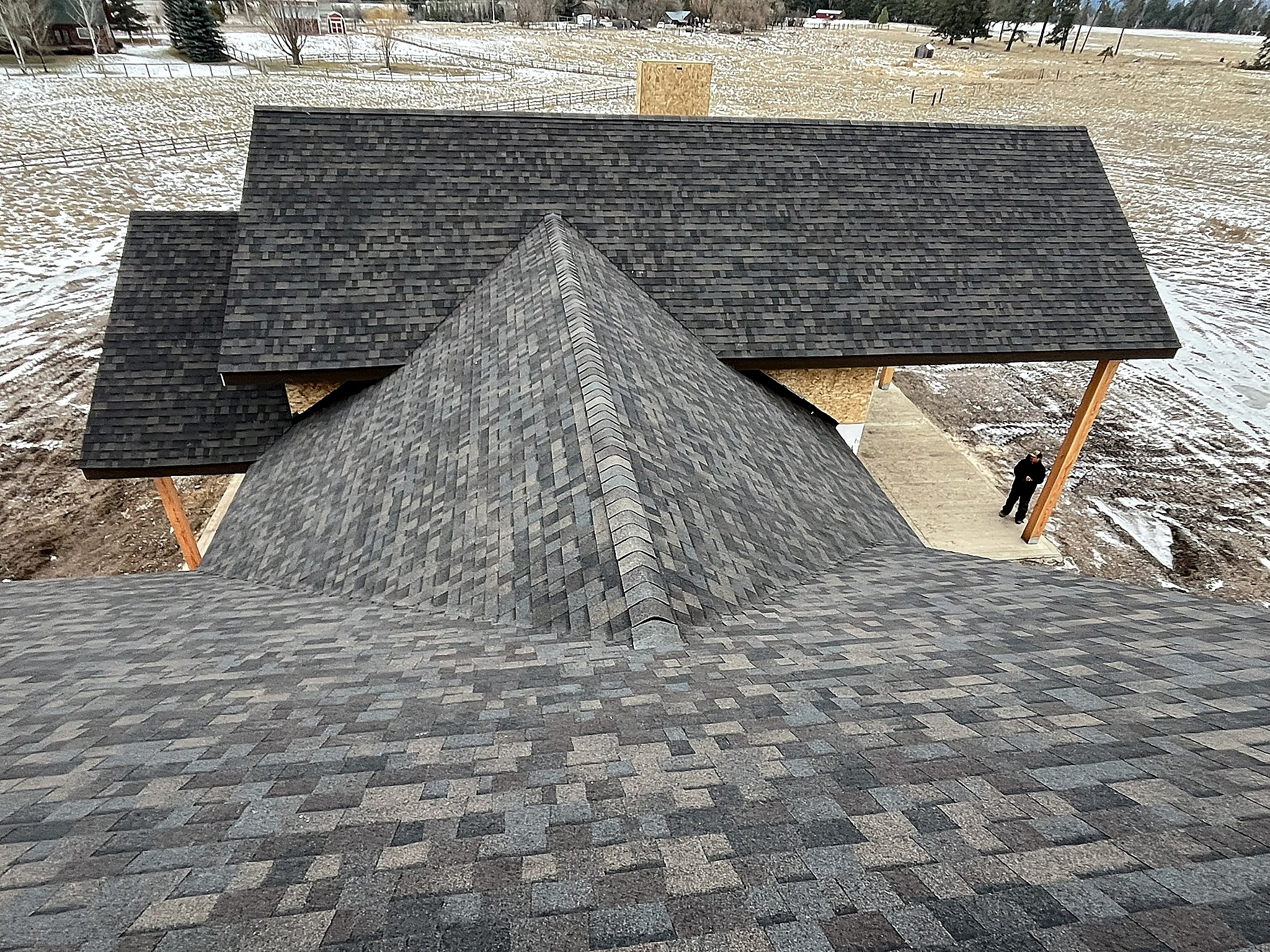
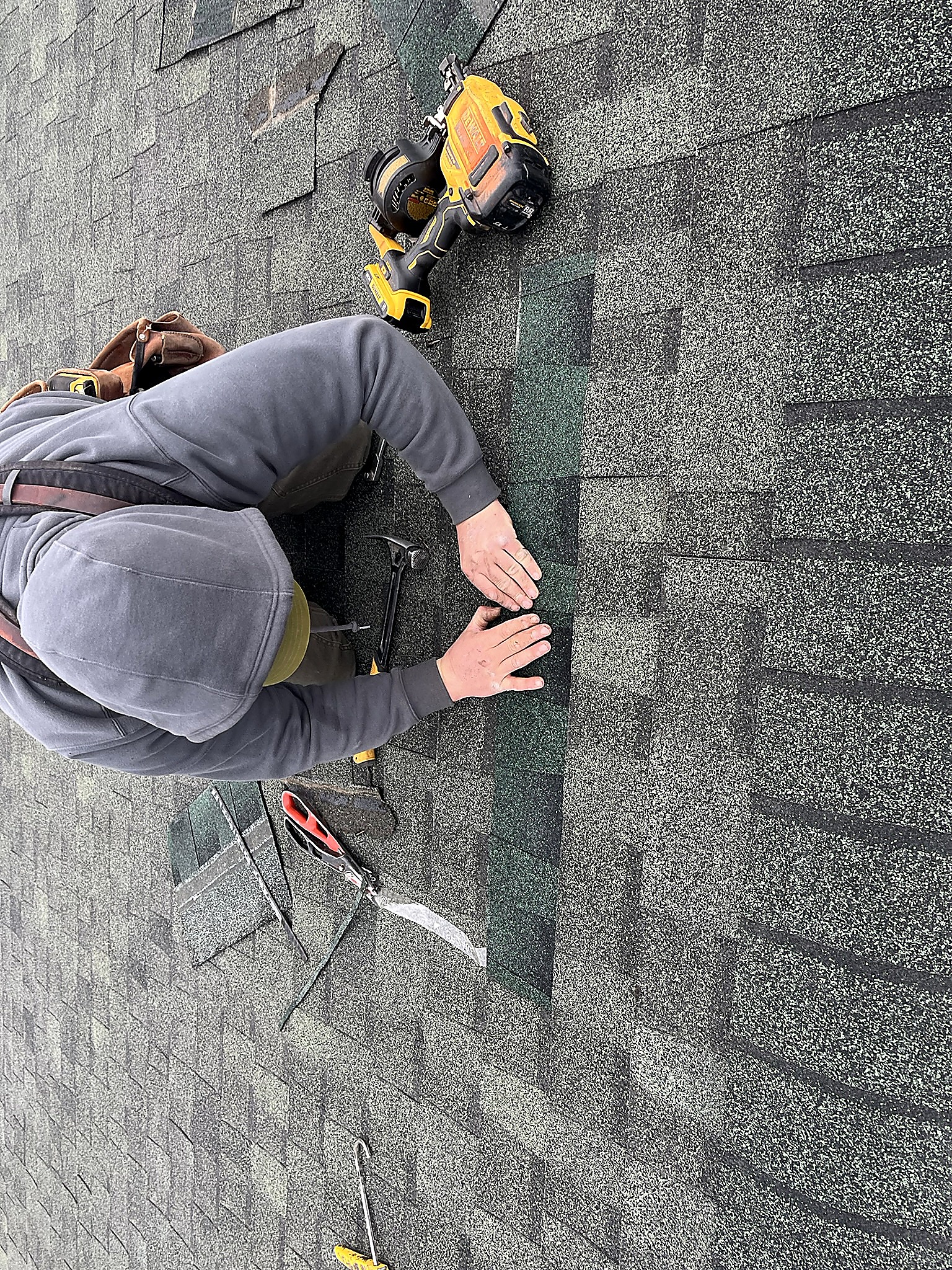
Day three is shingle installation, finishing the flashing details, and a full cleanup including a magnet sweep for nails. We walk the job with you, answer questions, and make sure you're comfortable with what was done.
Larger or steeper roofs take longer, and weather can shift the schedule. We keep you informed throughout — clear communication is part of the work.
You'll know what's happening each day before it happens.
Frequently asked
How do I know if my shingle roof needs replacing or just repairing?
If most of the roof is still sound and the problem is isolated — a few damaged shingles, a worn flashing, a single leak — a targeted repair usually makes sense. Replacement becomes the better call when shingles are brittle and cracking across the roof, granules are washing into the gutters in volume, the roof is near the end of its expected life, or the decking underneath is soft. We get on the roof and tell you what we actually see before recommending either one.
Why do you tear off the old roof instead of roofing over it?
A tear-off lets us see the decking underneath. In this climate, moisture that worked its way under old shingles can rot the wood, and you cannot find that from above. Roofing over a problem hides it and shortens the life of the new roof. A clean deck is the only honest starting point.
What is an ice barrier and why does my roof need one at the eaves?
An ice barrier is a self-adhering membrane installed along the lower edge of the roof, at the eaves. Its job is to stop water that backs up under the shingles during freeze-thaw cycles from reaching the decking. In a cold, snowy climate like ours, that ice-dam backup is one of the most common causes of winter leaks, and the membrane is the layer that keeps the water out when it happens.
Why do you assess ventilation on every replacement?
Because ventilation is what separates a roof that lasts from one that fails early. A roof that can't breathe traps heat and moisture in the attic, which bakes the shingles from below in summer and feeds ice dams in winter. We measure what's there, look at how the air moves, and recommend what's missing. Getting this right is the difference between a roof that lasts and one that doesn't in a cold, snowy climate.
What does your estimate include?
A written scope of work, the materials we recommend and why, the tear-off and disposal, any decking replacement, underlayment and ice barrier at the eaves, ventilation, flashing, and cleanup with a magnet sweep for nails. You'll know the price and what's behind it before we start.
How long does a shingle roof replacement take?
Most residential tear-offs and replacements are a one-to-three-day job depending on size, pitch, and what we find under the old roof. We protect your landscaping, clean up daily, and do a final walkthrough with you when it's done.
Where we work
Serving the Flathead Valley
From Kalispell to West Glacier. Pan and zoom to see your town.
Free estimate
Let's look at your roof
Send a few details and we'll get back to you during office hours. You'll talk to Tessa & Joseph Stremel — not a salesperson. Free estimates, no obligation.
Prefer to call?
(406) 260-5284