Roof Repair
Roof Repair
The most common causes of leaks in this climate
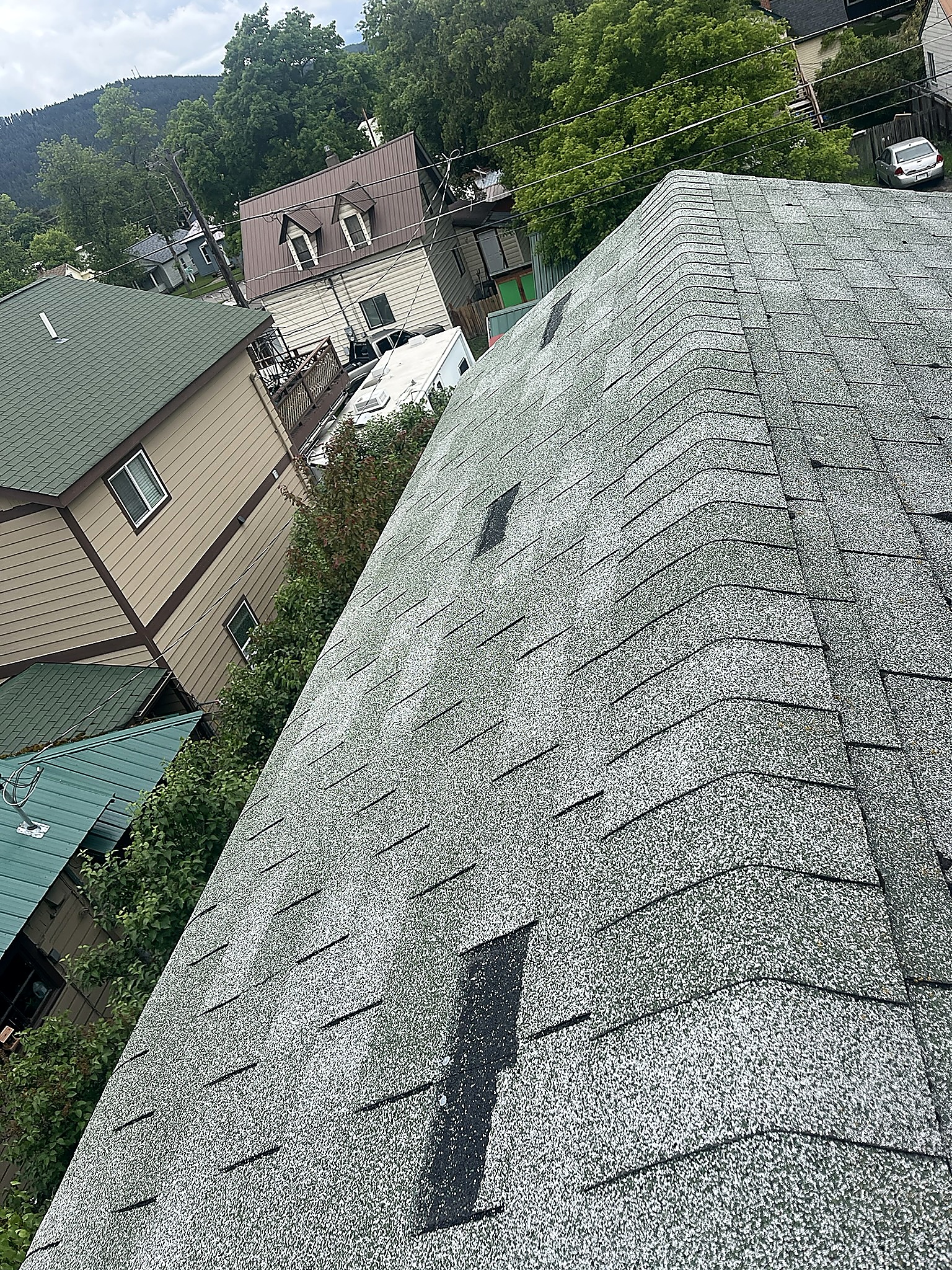
The Flathead Valley freezes hard, snows heavy, and thaws slowly. That cycle is hard on every weak point on a roof. The most common leaks we see come from flashing failures around chimneys, valleys, and penetrations like plumbing vents and skylights; wind-lifted or creased shingles; aging sealant and boot collars that have cracked and let water in; and ice-dam backup at the eaves during freeze-thaw cycles.
Sealants and rubber boots don't last forever, and the sun and cold take a toll on them. A boot collar that's cracked at a plumbing vent is one of the most common — and most overlooked — sources of a leak. So is a section of step flashing that's pulled away from a chimney or wall. These are small, specific failures, and they're exactly what a repair is meant to fix.
Why the leak is often not directly above the stain
Water travels. It enters through a gap or a failed flashing higher on the roof, runs along the underside of the decking or along a rafter, and shows up as a stain on your ceiling somewhere else entirely. The stain tells you there's a problem. It rarely tells you where the water is getting in.
That's why a repair that starts by patching the spot above the stain usually doesn't hold. We get on the roof, trace the water back to where it's actually entering, and fix that. It's slower and more honest than guessing from the ceiling, and it's the only way a repair actually solves the problem.
Flashing failures around chimneys, valleys, and penetrations
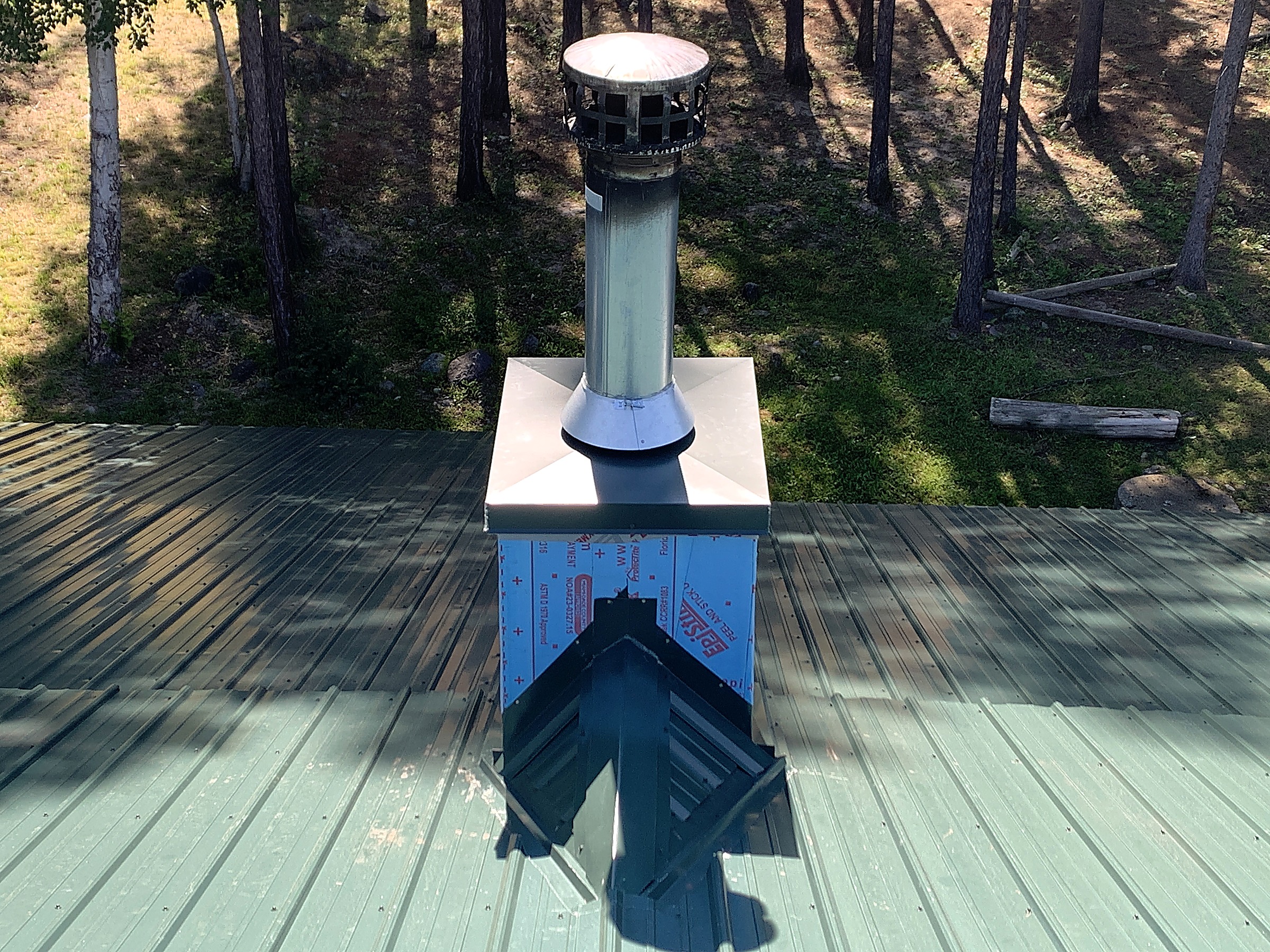
Flashing is the metal and sealant that bridges the gaps where the roof meets something else — a chimney, a wall, a valley, a plumbing vent, a skylight. It's where most leaks originate, because it's where the roof is most complicated and most exposed.
Step flashing at a chimney can pull away from the brick or wall over years of expansion and contraction. Valley flashing can lift or corrode. Boot collars at plumbing vents crack in the sun and cold. Each of these is a small, specific failure that lets water in, and each is repairable when the rest of the roof is sound. We identify which one it is and fix it properly rather than sealing over the symptom.
When a repair is the right answer — and when it's money spent twice
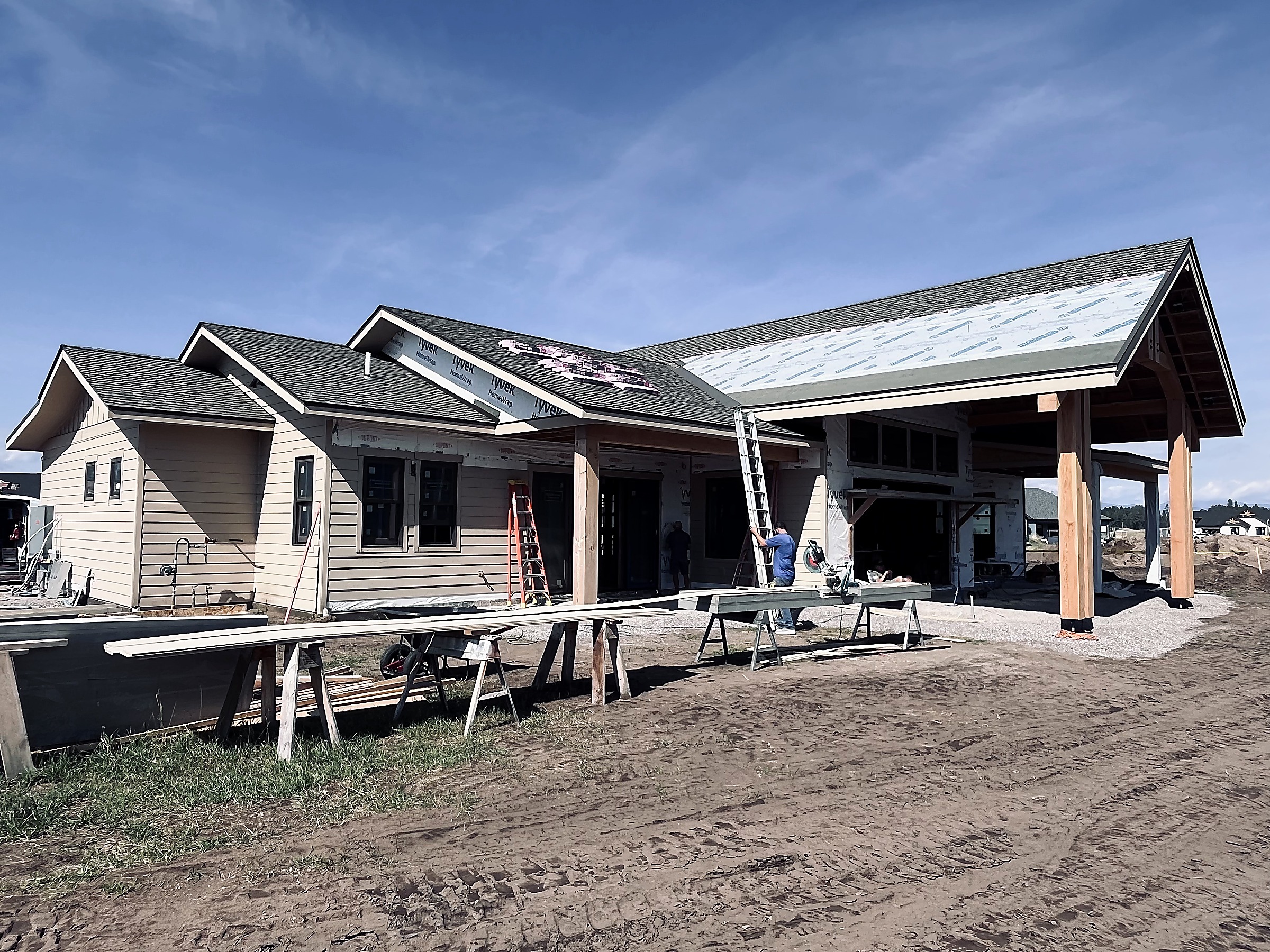
A repair is the right call when the roof is otherwise sound. If the shingles are still flexible, the decking is solid, and the problem is isolated — a section of flashing, a few shingles, a single penetration — a targeted repair buys you years.
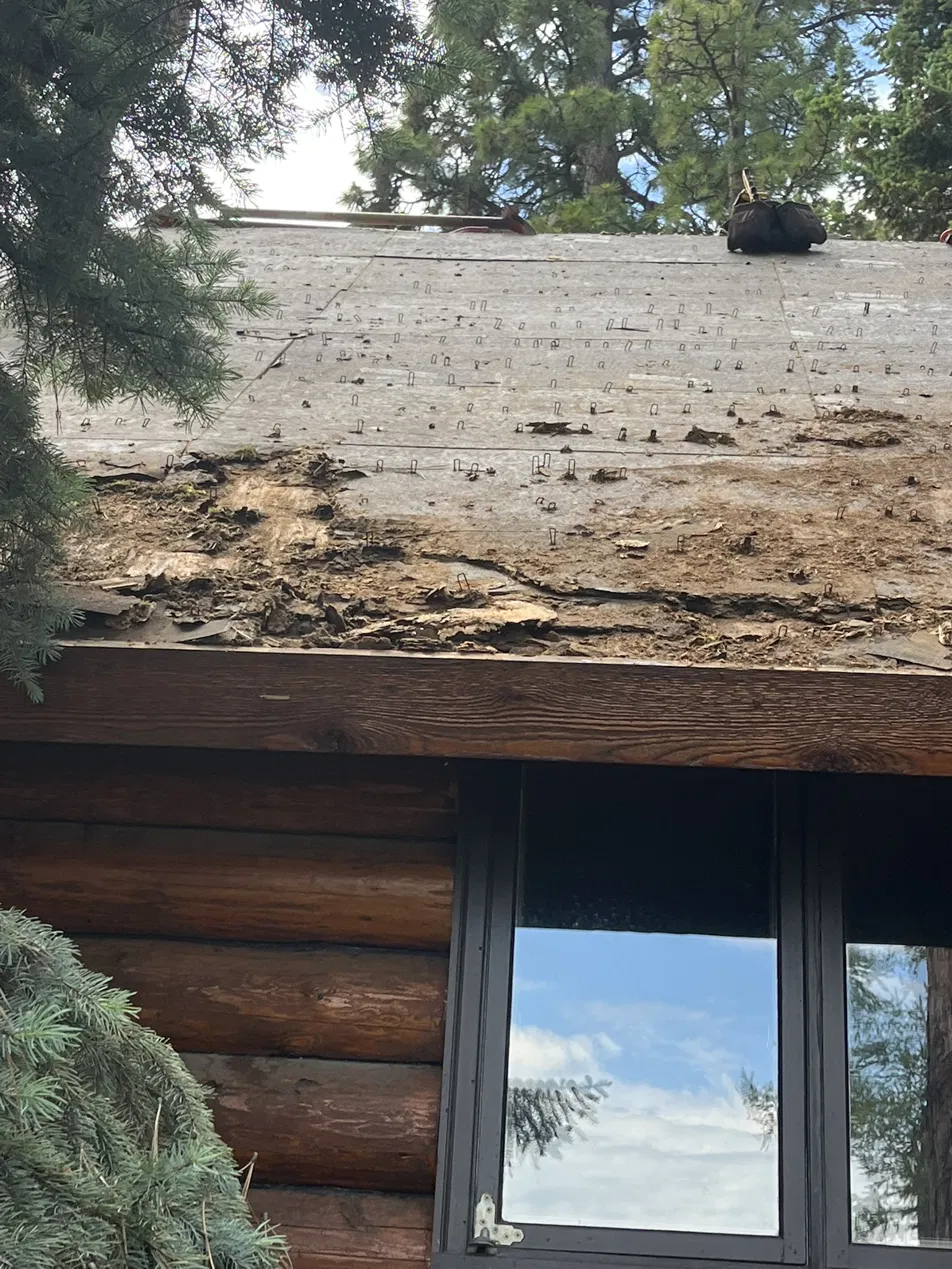
A repair is money spent twice when the roof is at the end of its life. If the shingles are brittle and cracking across the roof, granules are washing into the gutters in volume, or the decking has gone soft, patching one leak just means the next one shows up a few months later. In that case the honest answer is a replacement, and we'll tell you that plainly rather than sell you a repair that won't hold.
We'd rather recommend the solution that's right for your roof than the bigger job — and we'd also rather tell you when a repair won't do it. That's the line we walk on every inspection.
What the inspection involves
We get on the roof and look at the whole picture: the shingles, the flashing at chimneys and valleys, the penetrations, the eaves, and the condition of the decking where we can see it. We trace the leak back to where the water is actually entering, not just where the stain shows up inside.
Then we explain what we found, what the repair involves, and what it costs — before any work starts. You'll know what you're paying for and why.
What it costs, and why it's not a flat rate
The minimum charge for a basic repair or service call is $350, and more involved repairs start around $500 depending on the work required. The price reflects the actual work your roof needs rather than a flat rate, because no two repairs are the same — a cracked boot collar and a rebuilt chimney flashing are different jobs with different materials and time.
Estimates are free. We'll tell you what we found, what it takes to fix it, and what it costs, and you decide from there. No pressure, no obligation.
Frequently asked
How much does a roof repair cost?
The minimum charge for a basic repair or service call is $350, and more involved repairs start around $500 depending on the work required. The price reflects the actual work your roof needs rather than a flat rate, and estimates are free. We'll tell you what we find and what it costs to fix before any work starts.
The stain on my ceiling isn't directly under where the roof leaks. Why?
Water travels. It enters through a gap or a failed flashing higher on the roof, runs along the underside of the decking or a rafter, and shows up as a stain somewhere else entirely. The stain tells you there's a problem; it rarely tells you where the water is getting in. That's why we get on the roof and trace it back to the source.
When is a repair the right answer instead of a replacement?
A repair is the right call when the roof is otherwise sound — the shingles are still flexible, the decking is solid, and the problem is isolated to a section of flashing, a few shingles, or a single penetration. When shingles are brittle and cracking across the roof, granules are washing into the gutters, or the decking is soft, a repair is money spent twice on a roof that needs replacing. We'll tell you which one you're looking at.
What are the most common causes of leaks in this climate?
Flashing failures around chimneys, valleys, and penetrations like plumbing vents and skylights; wind-lifted or creased shingles; aging sealant and boot collars that have cracked; and ice-dam backup at the eaves during freeze-thaw cycles. The freeze-thaw cycle here is hard on every one of these weak points.
What does the inspection involve?
We get on the roof, look at the shingles, the flashing at chimneys and valleys, the penetrations, the eaves, and the condition of the decking where we can see it. We trace the leak back to where the water is actually entering, not just where the stain is. Then we explain what we found, what the repair involves, and what it costs. Estimates are free.
Do you repair metal roofs too?
Yes. Metal roofs have their own common issues — loose or backed-out fasteners on exposed-fastener panels, aging gaskets, and seam or flashing failures. We diagnose and repair those as well. The approach is the same: find where the water is actually getting in and fix that, not just the spot where it shows up inside.
Where we work
Serving the Flathead Valley
From Kalispell to West Glacier. Pan and zoom to see your town.
Free estimate
Let's look at your roof
Send a few details and we'll get back to you during office hours. You'll talk to Tessa & Joseph Stremel — not a salesperson. Free estimates, no obligation.
Prefer to call?
(406) 260-5284