Standing Seam Metal Roofing
Metal Roofing
What standing seam is, and how concealed fasteners differ from exposed
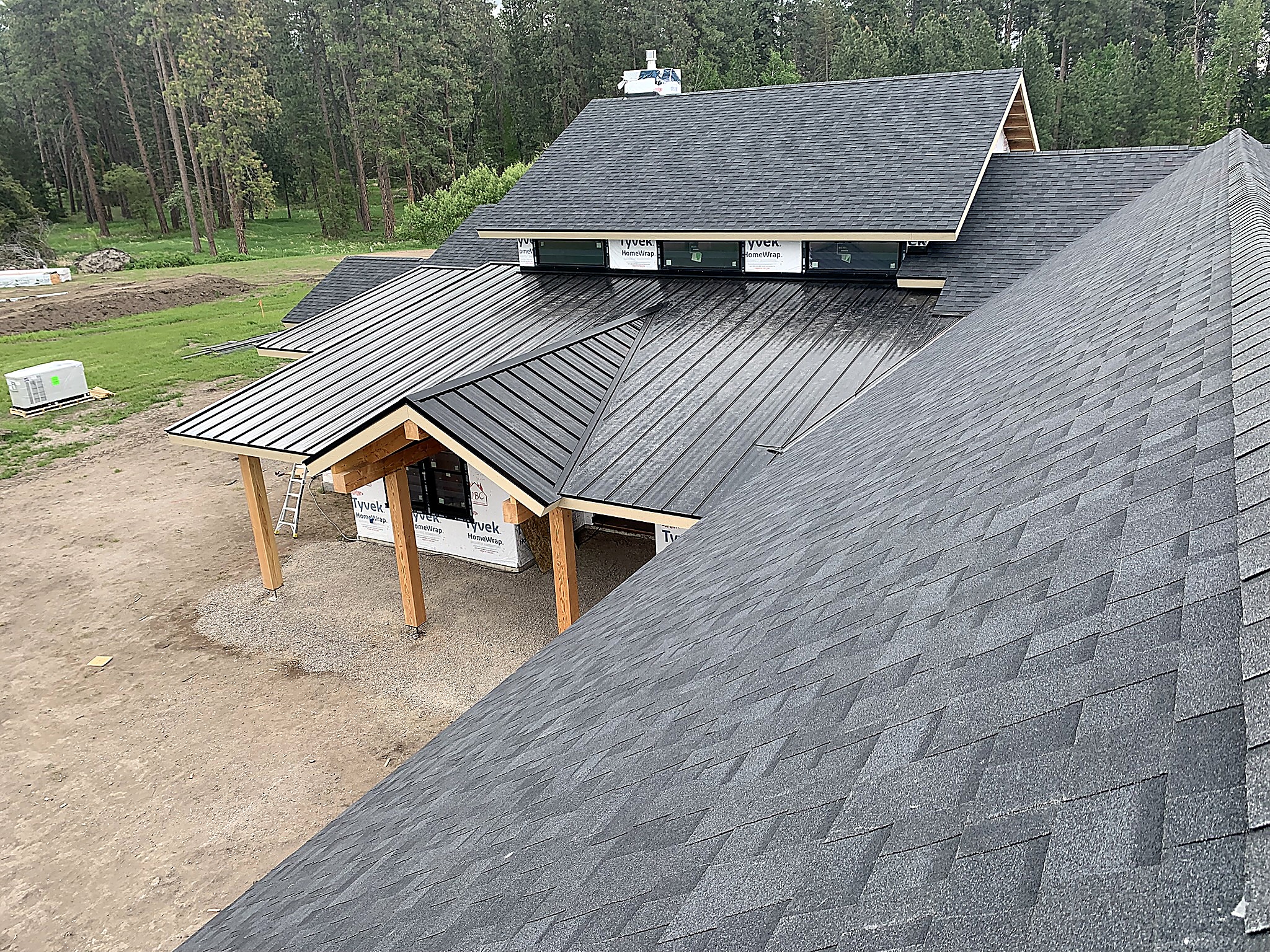
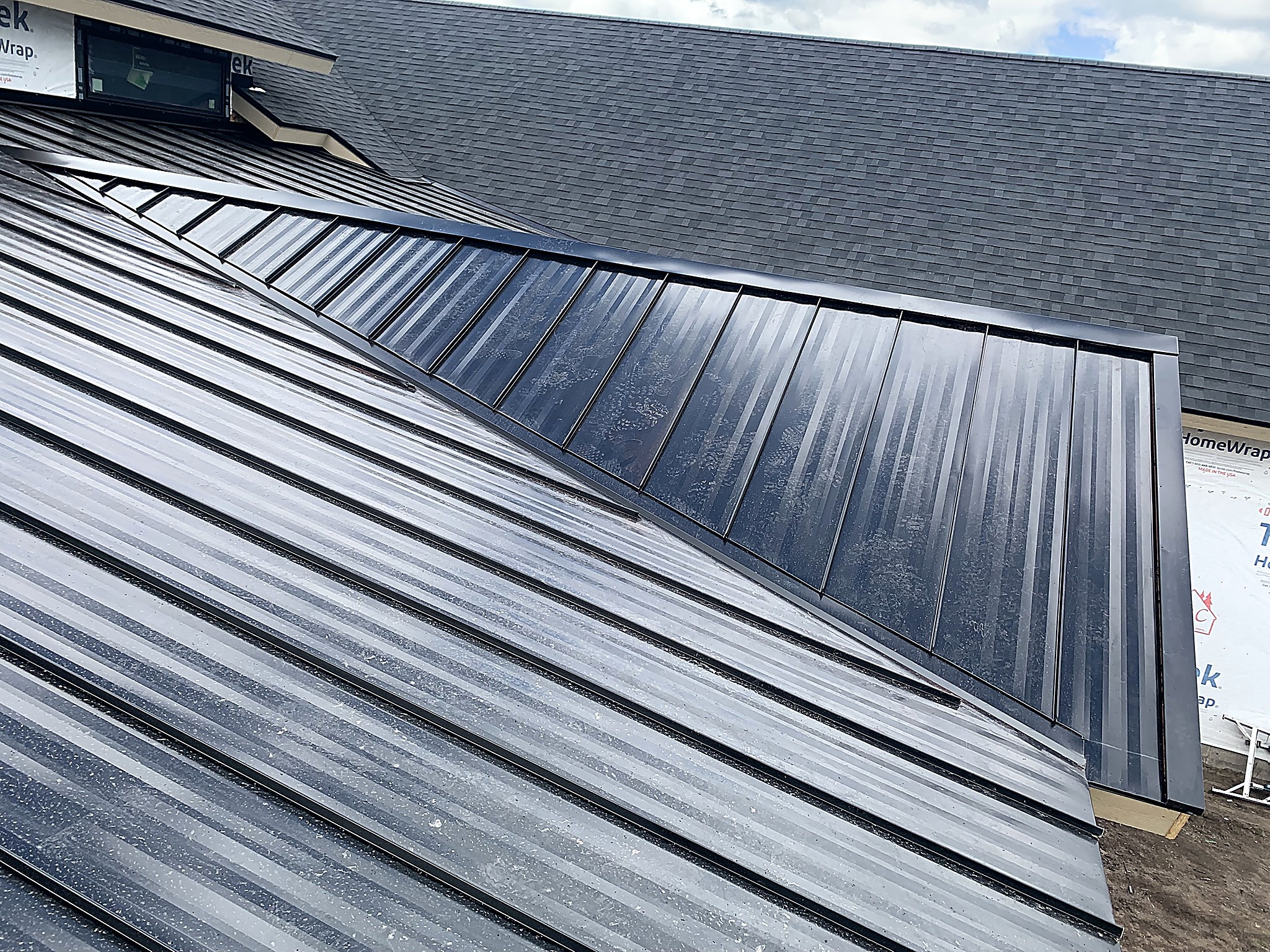
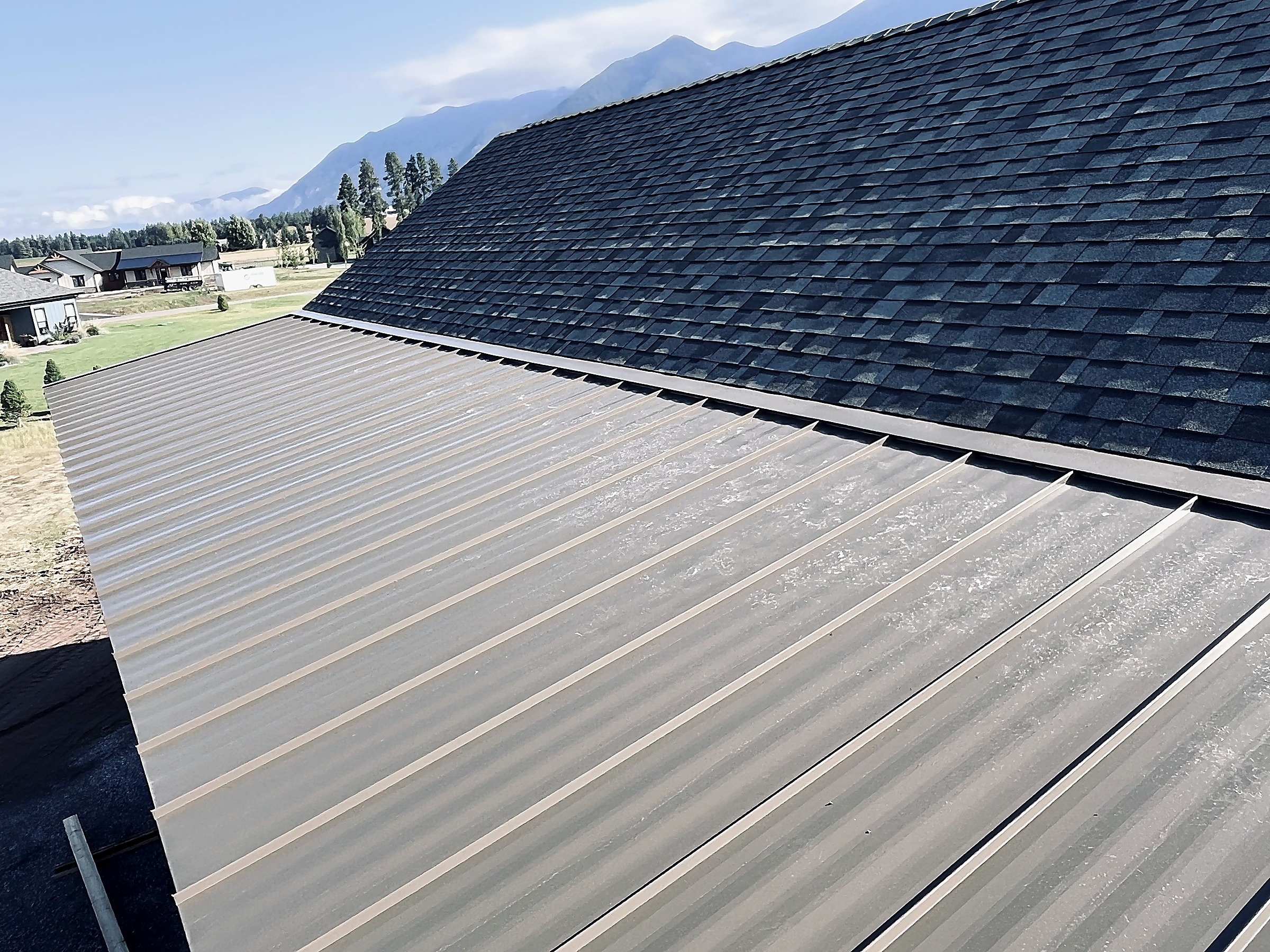
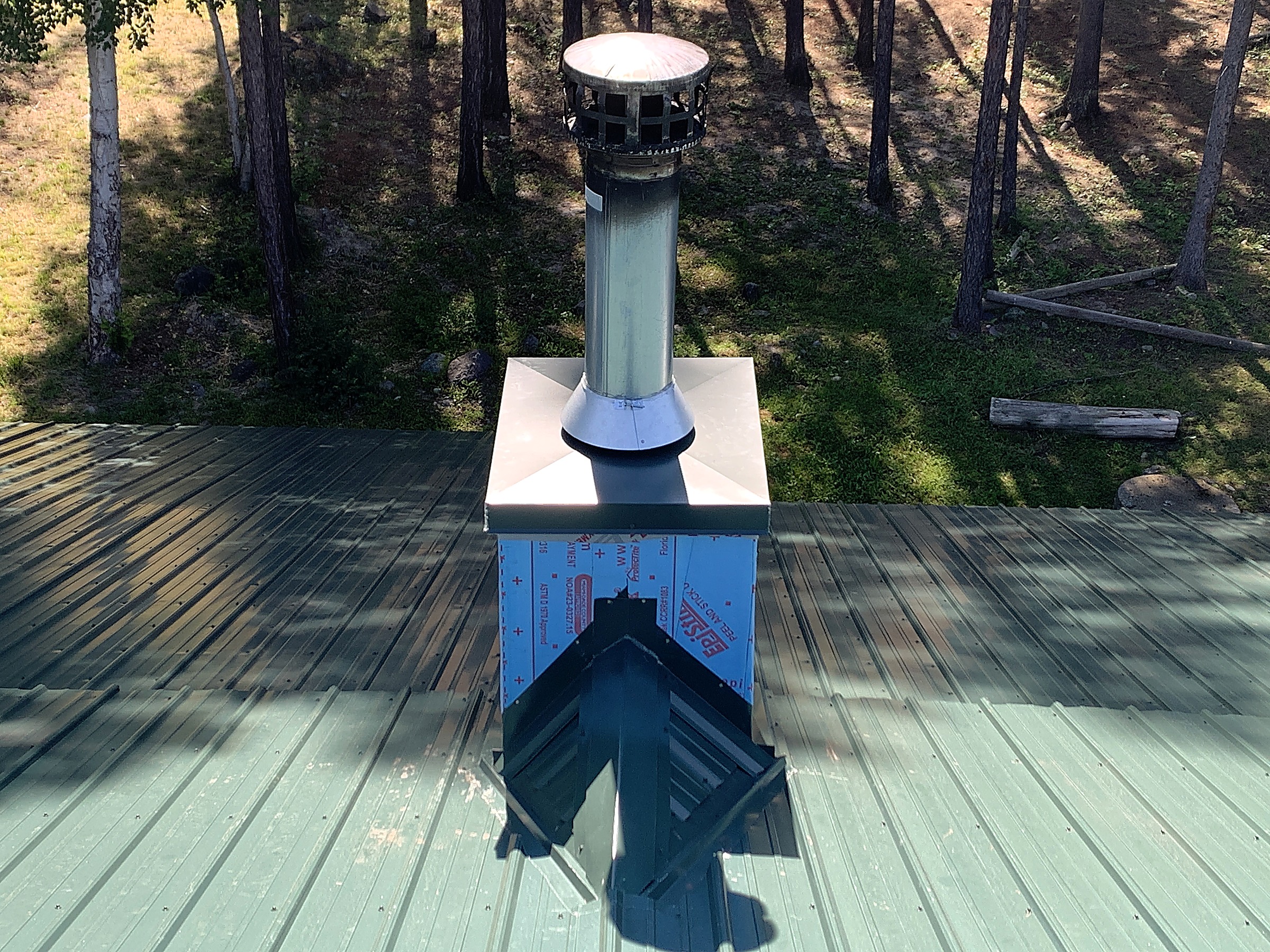
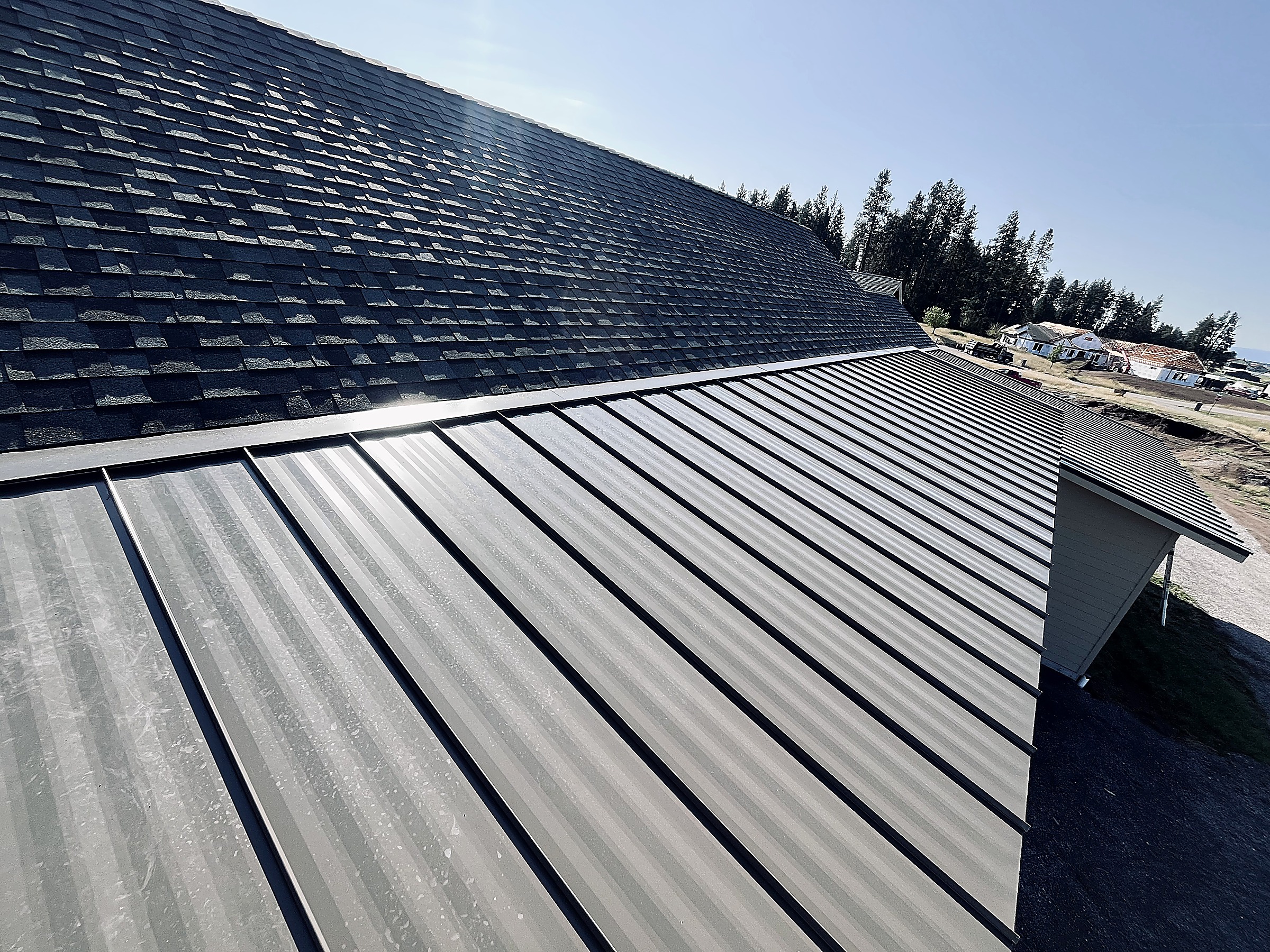
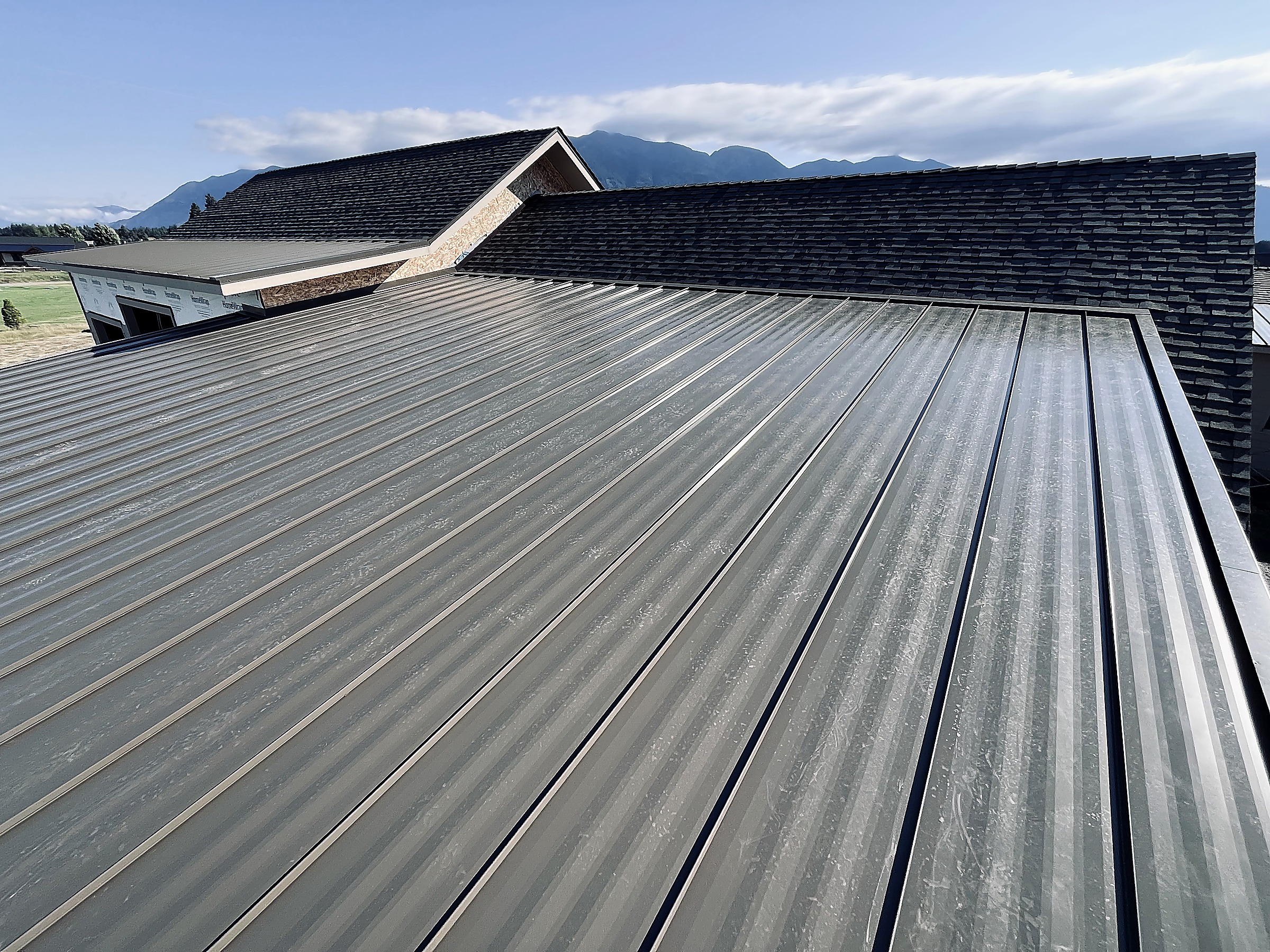
A standing seam metal roof is made of long panels that run from your eave to the ridge. We join adjacent panels by folding one edge over the other to form a raised seam — the "standing seam." The panels attach to the deck with clips that sit under the seam, so the fasteners stay concealed inside the fold.
That's the key difference from exposed-fastener metal, where the panel is screwed down through the face with a gasketed screw and washer visible on the surface. Standing seam has no fastener piercing the panel face and no gasket exposed to the weather. Concealed fasteners mean there's nothing on the surface to age, back out, or leak — which is the heart of why standing seam lasts longer.
That concealed fastener is the whole reason this roof outlasts the others.
Why it performs well under snow load and sheds snow
Metal is strong for its weight, and a properly installed standing seam roof carries the seasonal snow the Flathead Valley gets without issue. Its smooth surface has low friction, so snow releases off it more readily than off a textured shingle roof — especially on steeper pitches. That shedding is a real benefit when you're thinking about what the roof holds through a Kalispell winter.
It's also a reason to plan for it. When a large amount of snow releases all at once, it can land on people, entryways, decks, or a lower roof section. That's why standing seam and snow retention go together, and we design snow guard placement for your roof's pitch and the snow it'll see. See our snow retention page for how we approach it.
Plan the retention with the roof, not after the first slide.
Service life compared with asphalt
A standing seam roof generally outlasts an asphalt shingle roof by a wide margin. The metal itself doesn't curl, crack, or lose granules the way shingles do, and because the fasteners are concealed there's no gasket to dry out and fail over time. For a homeowner thinking in decades rather than years, that's the real argument for it.
If you're staying in the home long-term, that's where standing seam earns its place.
Cost relative to shingle, and why the difference narrows over time
Standing seam costs more up front, and we'll say that plainly. The material is more expensive, panels are often formed and cut to length for your roof, and the installation is slower and more detailed — each seam is folded and fastened with clips.
Over the life of the roof, the gap narrows. A shingle roof may reach the end of its service life and need replacing again; a standing seam roof keeps going. If you're comparing only the first price, shingle wins. If you're comparing what you pay per year over the decades the roof is on your home, standing seam closes much of that distance. We'll show you both honestly and let you decide.
Request a quote and we'll lay both options out side by side.
Panel and color options
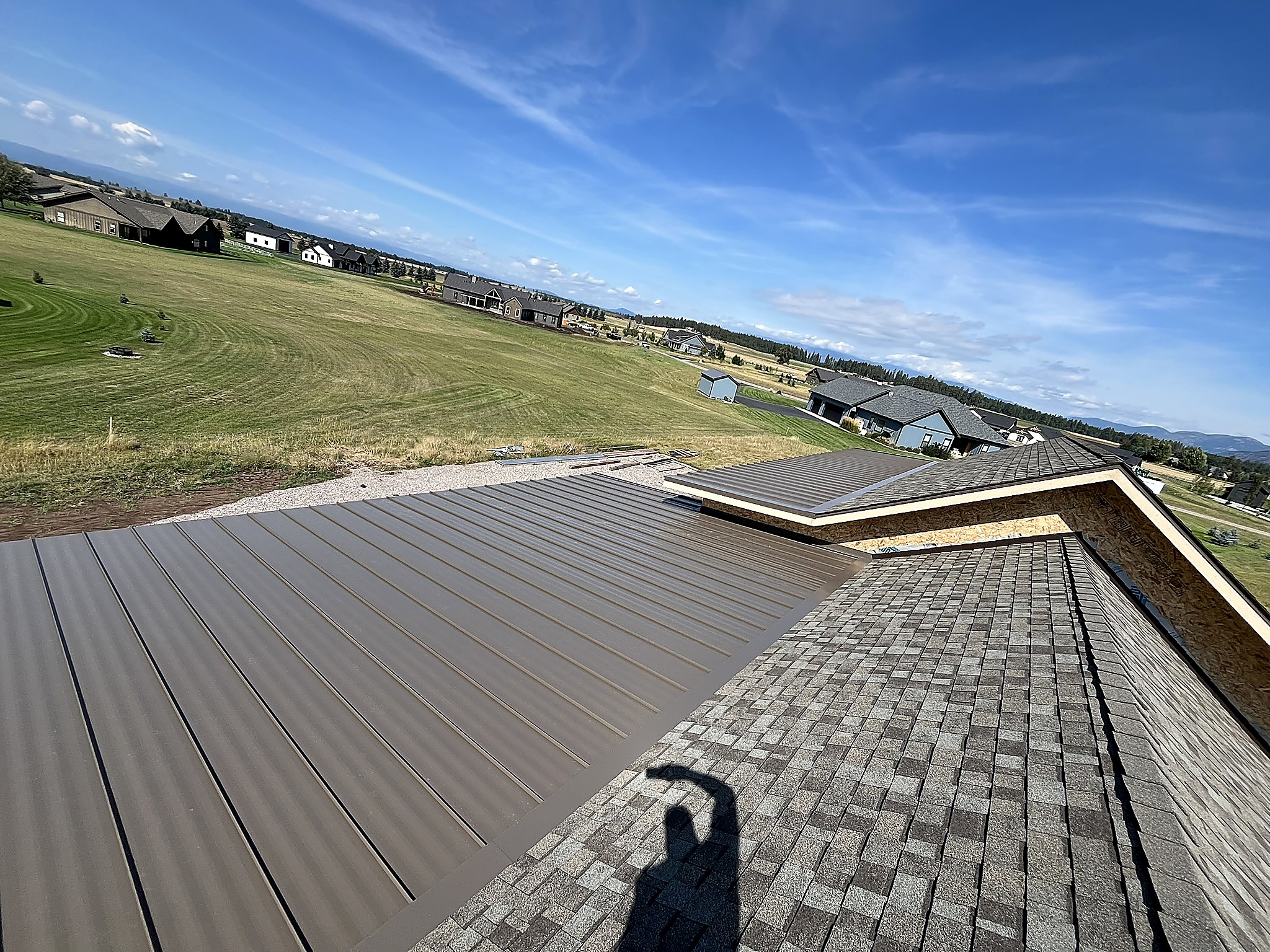
There's a range of standing seam panel profiles and a wide selection of colors that fit Montana homes and cabins — dark charcoal and slate tones, bronzes, greens, reds, and more. The profile and the color both change how the roof reads on your house, and some profiles suit certain pitches better than others.
We walk you through what's available and help you choose based on how it'll actually look on your roof and your home's style, not just on a small sample. You'll see real options and understand the trade-offs before you decide.
You'll choose with the house in front of you, not a swatch.
How standing seam pairs with snow retention
On a metal roof in this valley, snow retention isn't an add-on — it's part of doing the roof right. We place snow guards to hold snow on the roof and release it gradually or in controlled amounts, protecting entries, decks, lower roofs, and anyone walking below.
The placement depends on your roof's pitch, length, and where the snow would land. We design it for your roof specifically. Read more on our snow retention and snow guards page.
Bring it into the conversation early and it costs less.
What the install process involves
Estimate and inspection. We get on the roof, measure, look at the deck and the existing roof, and talk through panel and color options. You get a written scope and price.
Tear-off and deck prep. The old roof comes off down to the decking. We inspect and replace any soft or rotted decking, then install underlayment and ice barrier at the eaves.
Panel forming and installation. Panels are cut to length for your roof and installed with concealed clips. Seams are folded, flashing is detailed at valleys, walls, and penetrations, and ventilation is addressed.
Snow retention and walkthrough. Snow guards go where your roof needs them. We clean up, do a magnet sweep for fasteners, and walk the job with you. Standing seam takes longer to install than shingle, and we keep you informed throughout.
You'll know what's happening at each stage before it starts.
Frequently asked
How is standing seam different from exposed-fastener metal roofing?
Standing seam panels attach with hidden clips that the next panel folds over, so the fasteners are concealed under the seam. Exposed-fastener panels are screwed down through the face of the metal, with a gasketed screw and washer at each fastener. Concealed fasteners don't have a gasket to age and don't have a hole punched through the panel face, which is why standing seam lasts longer and costs more.
Does standing seam really shed snow?
A smooth metal roof has a low-friction surface, and snow tends to release off it more readily than off a textured shingle roof — especially on steeper pitches. That's also exactly why snow retention matters on a metal roof. Without snow guards, a large amount of snow can release all at once and land on people, entryways, decks, or lower roof sections. We pair standing seam with properly placed snow retention.
How long does a standing seam metal roof last compared to asphalt shingle?
A standing seam roof generally has a longer service life than an asphalt shingle roof. The metal itself doesn't degrade the way shingles do, and because the fasteners are concealed there's no gasket to dry out and fail. It costs more up front, and over the years the difference narrows because you're not replacing it.
Why does standing seam cost more than shingle?
The material is more expensive, the panels are often formed and cut to length for your roof, and the installation is slower and more detailed — each seam is folded and fastened with clips. You're paying for a longer-lasting system and a more involved install. Over the life of the roof the gap narrows, but up front it is the higher-priced option.
What panel and color options are there?
There's a range of panel profiles and a wide selection of colors, from dark charcoal and slate tones to bronzes, greens, and reds that fit Montana homes. We walk you through what's available and what works with your home's style and pitch, and help you choose based on how it'll actually look on your roof — not just on a sample.
Do I need snow retention on a standing seam roof?
In this climate, yes. Snow releases off a smooth metal roof, and without retention it can come down in a sheet. We design snow guard placement for your roof's pitch and the snow it'll see. See our snow retention page for how we approach it.
Where we work
Serving the Flathead Valley
From Kalispell to West Glacier. Pan and zoom to see your town.
Free estimate
Let's look at your roof
Send a few details and we'll get back to you during office hours. You'll talk to Tessa & Joseph Stremel — not a salesperson. Free estimates, no obligation.
Prefer to call?
(406) 260-5284