Exposed-Fastener Metal Roofing
Metal Roofing
What exposed-fastener panel systems are, including Tuff-Rib style
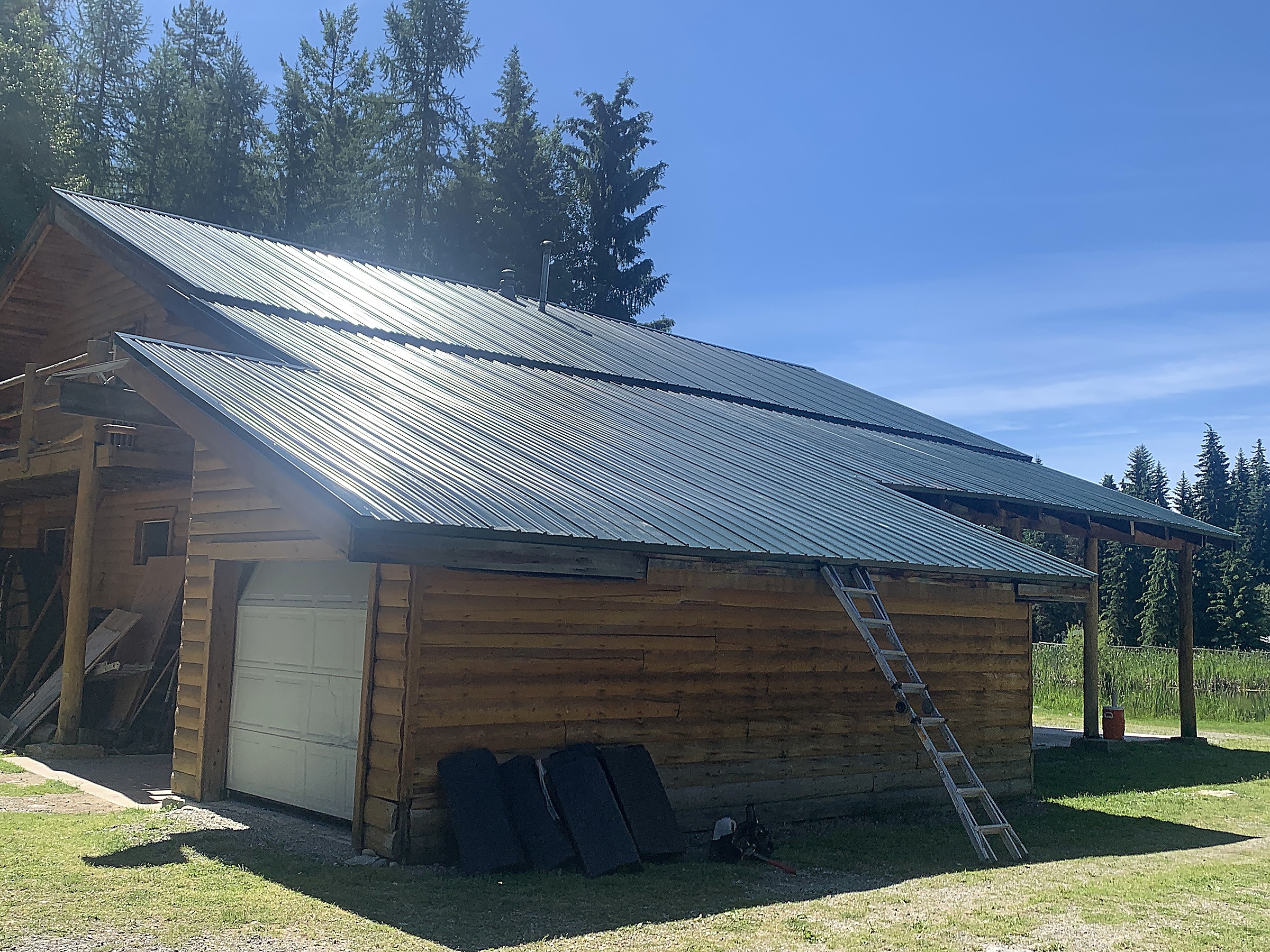
Exposed-fastener metal roofing is made of panels fastened down through the face of the metal with a gasketed screw and washer at each fastener point. The fasteners are visible on the surface of the roof. Tuff-Rib is one common profile in this family — a ribbed panel with a repeating pattern of raised ribs that gives a relatively thin sheet its strength and spans the framing.
These are the workhorse panels you see on shops, barns, and outbuildings across the valley. They're straightforward, economical, and they shed water and snow well. The trade-off is the exposed fastener, which is the part that ages — more on that below.
It's the panel that gets the job done for less.
Where exposed-fastener metal makes sense
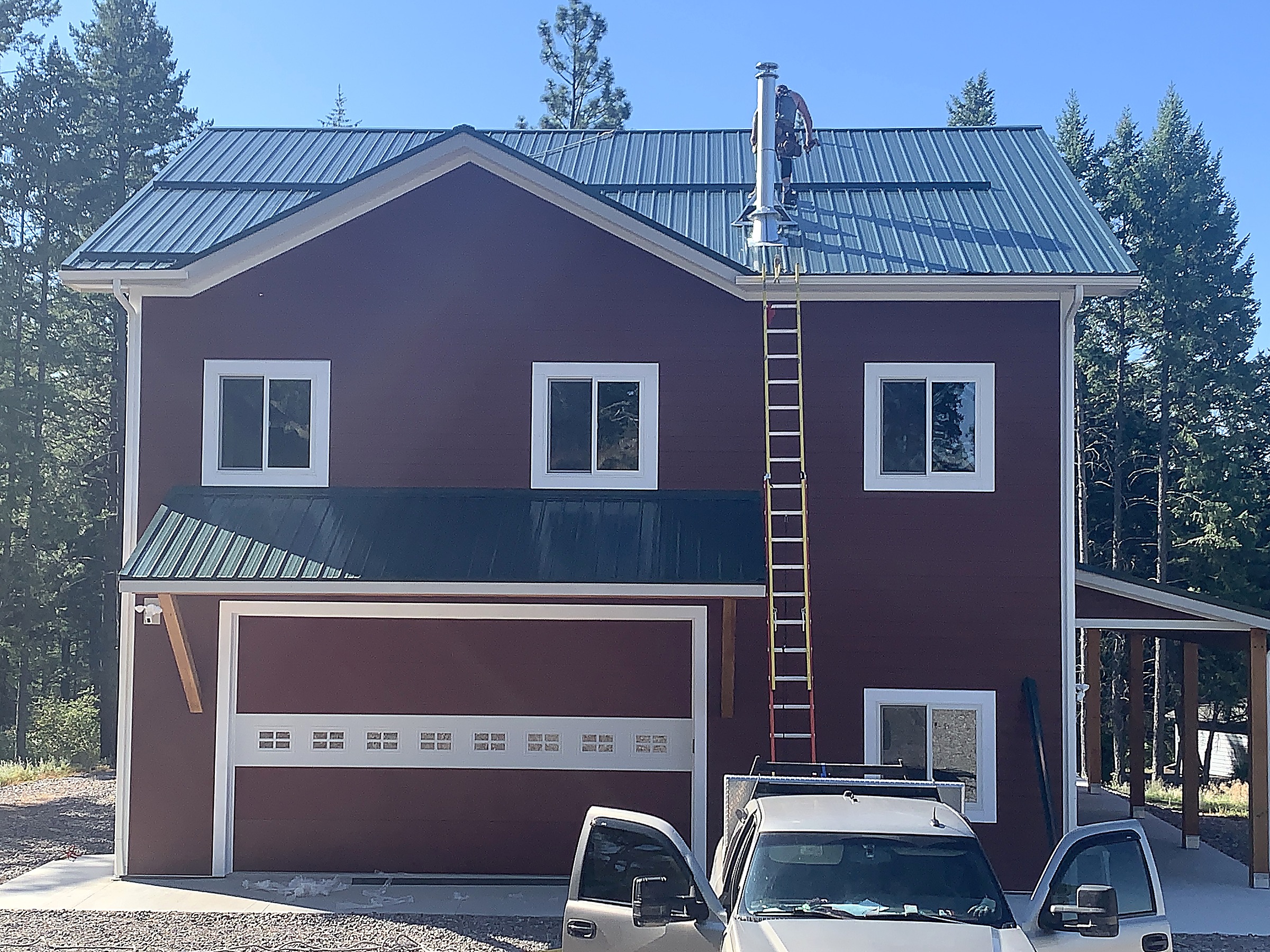
Exposed-fastener panels are the right fit for shops, barns, outbuildings, agricultural buildings, and budget-conscious residential projects. On a working building where the roof needs to be tough and keep the weather out, but where the longest possible service life isn't the priority, the lower cost of exposed-fastener metal makes good sense.
For a home you plan to live in for decades, standing seam usually pays off over time. For a shop or barn, or for a residential project where the up-front cost is the deciding factor, exposed-fastener is a solid, honest choice. We'll tell you which fits your building rather than pushing the higher-priced option.
Tell us what the building is and we'll tell you if it fits.
How exposed-fastener differs from standing seam
The difference comes down to the fastener. Standing seam attaches with concealed clips folded under a raised seam — no fastener pierces the panel face, and there's no gasket exposed to the weather. Exposed-fastener panels are screwed down through the surface, with the gasketed screw and washer visible on top.
That exposed fastener is simpler and cheaper to install, and it's also the wear point. The gasket ages in the sun and temperature swings, and fasteners can back out as the metal expands and contracts. Standing seam avoids that problem entirely, which is why it lasts longer and costs more. Exposed-fastener trades some service life for a significantly lower price.
Same metal, different fastener — and a different lifespan.
Fastener and gasket maintenance over time
With exposed-fastener metal, the fasteners are the upkeep item. Over the years, the rubber gaskets under the screw heads can dry out and crack, and screws can work loose with the metal's expansion and contraction. A backed-out screw or a failed gasket is where a leak starts on this kind of roof.
An occasional inspection — looking for backed-out fasteners and dried gaskets, and replacing or re-tightening as needed — keeps the roof sound. It's a small, honest maintenance cost that comes with choosing this panel type, and we'd rather you know that going in.
A quick check every few years keeps it tight.
The honest lifespan expectation
An exposed-fastener metal roof lasts a long time, but not as long as standing seam, and not without the upkeep above. The metal itself holds up for decades; the fasteners and gaskets are what limit the service life. With periodic maintenance it performs well. Left alone indefinitely, the gaskets eventually fail and fasteners loosen.
We won't tell you it's the same roof as standing seam at a lower price. It isn't. It's the value option — a tough, weather-tight metal roof that costs less and asks for a little attention over the years. For the right building, that's exactly what's needed.
Know what you're buying and it's a smart choice.
When a homeowner should choose this over standing seam
Choose exposed-fastener when the building is a shop, barn, or outbuilding, or when the up-front cost is the deciding factor and you're comfortable with the maintenance trade. Choose standing seam when you want the longest-lasting metal roof with the least upkeep, and the higher up-front cost fits the project.
The honest comparison is the value of this page. We install both, we'll quote both, and we'll lay out the trade-offs for your specific building so you can decide with your eyes open. Estimates are free, and there's no pressure to pick the more expensive option.
Request a quote and we'll quote both for your building.
Frequently asked
What is an exposed-fastener metal roof, and what is Tuff-Rib style?
An exposed-fastener metal roof is made of panels screwed down through the face of the metal, with a gasketed screw and washer at each fastener visible on the surface. Tuff-Rib is one common profile in this family — a ribbed panel with a repeating pattern of raised ribs that gives the panel its strength. These are the workhorse panels you see on shops, barns, and outbuildings across the valley.
How is exposed-fastener different from standing seam?
Standing seam fastens with concealed clips under a folded seam — no fastener pierces the panel face. Exposed-fastener panels are screwed down through the surface. That exposed gasketed fastener is the main difference: it's simpler and cheaper to install, and it's the part that ages over time. Standing seam lasts longer and costs more; exposed-fastener is the value option.
Where does an exposed-fastener metal roof make sense?
On shops, barns, outbuildings, agricultural buildings, and budget-conscious residential projects where the goal is a solid metal roof at a lower cost than standing seam. For a working building where the roof needs to be tough and weather-tight but doesn't need the longest possible service life, it's often the right call.
How long does an exposed-fastener metal roof last?
Shorter than standing seam, honestly. The metal holds up, but the gasketed fasteners are the wear point — over the years the gaskets can dry out, and fasteners can back out with expansion and contraction. Periodic inspection and replacing gaskets or re-tightening fasteners extends the life, but it's not a install-it-and-forget-it roof the way standing seam is.
Do the fasteners really need maintenance?
Yes, over time. The gaskets under the screw heads age with sun and temperature swings, and fasteners can work loose as the metal expands and contracts. An occasional inspection — checking for backed-out screws and dried gaskets — and replacing them as needed keeps the roof sound. It's a small, honest upkeep cost that comes with this panel type.
Should I choose exposed-fastener or standing seam for my building?
It depends on the building and the budget. For a home you plan to be in for decades, standing seam usually pays off. For a shop, barn, or outbuilding — or a residential project where up-front cost matters most — exposed-fastener is a sensible, honest choice. We'll lay out the trade-offs for your specific building and let you decide.
Where we work
Serving the Flathead Valley
From Kalispell to West Glacier. Pan and zoom to see your town.
Free estimate
Let's look at your roof
Send a few details and we'll get back to you during office hours. You'll talk to Tessa & Joseph Stremel — not a salesperson. Free estimates, no obligation.
Prefer to call?
(406) 260-5284