Hail Damage Roof Inspection & Repair
Hail Damage
What hail damage looks like on asphalt versus metal
On an asphalt shingle roof, hail leaves soft, bruised spots. The impact knocks granules loose and dents the mat underneath, leaving a darkened, sometimes slightly soft area. You may see a random, scattered pattern of hits — not the uniform wear of aging — and in harder hits, exposed substrate where the granules are gone entirely.
On a metal roof, hail shows as dents across the panels. The metal is dished in at the impact points, and the size and depth of the dent tells you how hard the hail hit. Both kinds of damage are often subtle enough to miss without getting up close and looking at the right angle.
Why hail damage is frequently missed on a first inspection
Hail damage doesn't always look like damage. Granule loss and bruising on asphalt can read as normal aging from the ground, and shallow dents on metal can disappear in flat light. A quick look from the driveway — or even a fast walkaround — can miss it entirely.
A proper inspection means getting on the roof, feeling for the soft spots in the shingle mat, and looking at the metal and shingles at an angle where the dents and bruising catch the light. That's the difference between an inspection that finds the damage and one that doesn't.
The difference between cosmetic and functional damage
Not every hail hit means the roof needs replacing, and we'll tell you that honestly. Cosmetic damage affects appearance but not how the roof sheds water — a shallow dent in metal that hasn't compromised the coating, or minor granule loss on a shingle that's still intact and sealed.
Functional damage means the roof's ability to keep water out is compromised — bruised shingles with exposed substrate that will break down and leak, or dents that have cracked a metal coating or broken a seal. Functional damage warrants a repair or replacement; cosmetic damage on a sound roof may not. We tell you which one you have, because we'd rather give you an honest answer than sell you a roof you don't need.
Why hail damage can go unnoticed for months
A hailstorm rolls through, the roof looks fine from the ground, and there's no immediate leak. So nothing gets done. But the damage is there — bruised shingles that keep losing granules with every rain, or a hairline crack in a metal coating that lets moisture in slowly. Months later, a stain appears on the ceiling, and by then the connection to the storm is no longer obvious.
That's why an inspection after any hailstorm is worth doing even when nothing seems wrong. Catching the damage while the cause is clear — and while it's still well-documented — is far better than discovering it after the fact.
How the inspection is documented
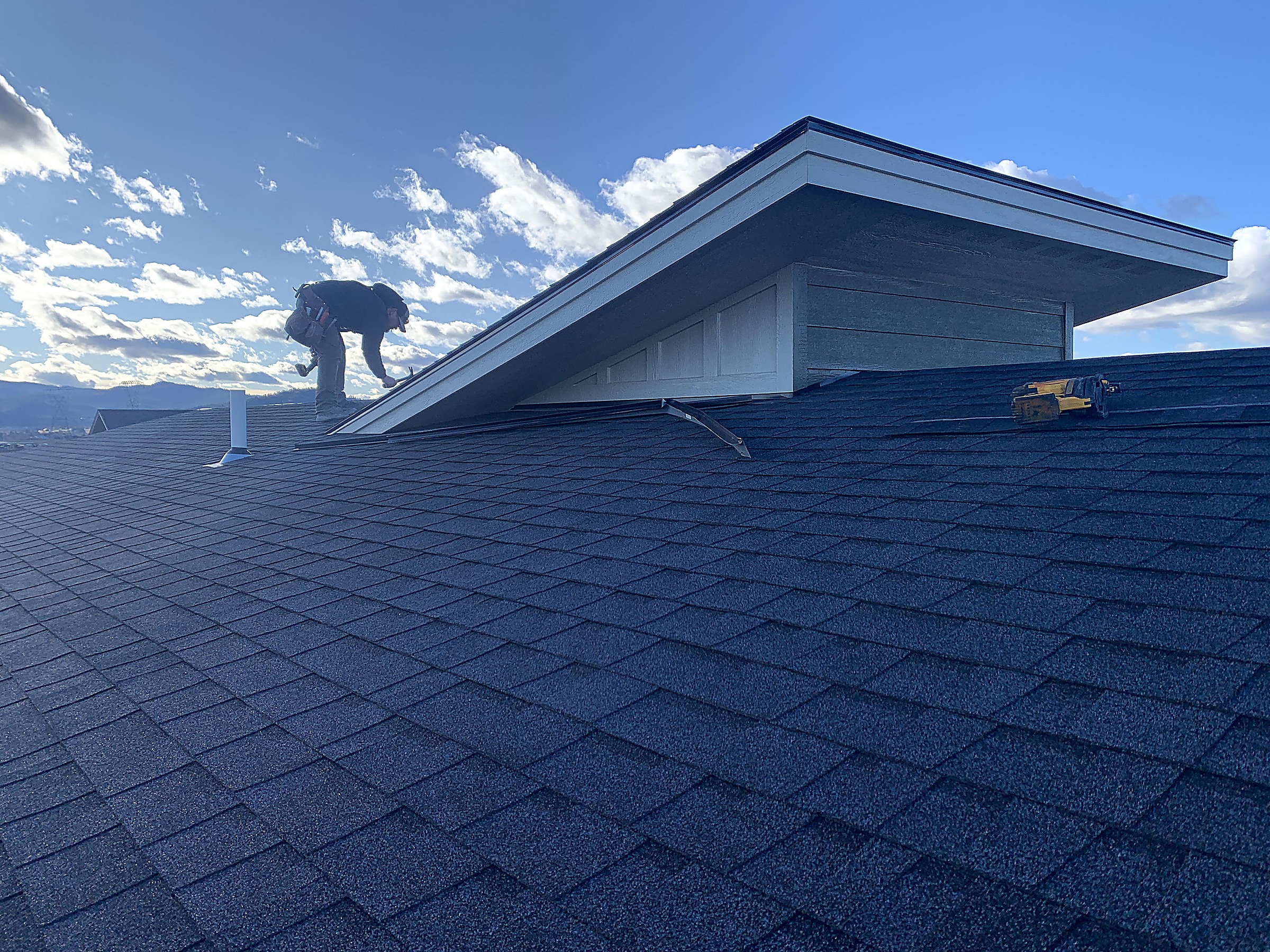
We get on the roof, identify every slope and the pattern of hits, photograph the bruising, granule loss, or dents, and note which damage is functional versus cosmetic. You get a clear, dated written summary with photos — a record you can use when you talk to your insurer.
We show you what we found and explain what it means in plain terms, so you understand your roof's actual condition before you decide anything.
What happens next
If the damage is functional, we walk you through what a repair or replacement involves and document everything for your insurer. If it's cosmetic and the roof is still sound, we tell you that too — we won't sell you a roof you don't need. When you're ready, we can help with the claim process. See our insurance claim assistance page for how that works.
Estimates are free. We'll tell you what we found, what it means, and what your options are — and you decide from there.
Frequently asked
What does hail damage look like on an asphalt roof versus a metal roof?
On asphalt shingles, hail leaves soft, bruised spots — darkened areas where the impact knocked granules loose and dented the mat underneath. You may see a random pattern of hits with exposed substrate. On a metal roof, hail shows as dents across the panels; the metal is dished in at the impact points. Both are often subtle enough to miss without getting up close.
Why is hail damage frequently missed on a first inspection?
Because it doesn't always look like damage from the ground. The granule loss and bruising on asphalt can look like normal aging, and the dents on metal can be shallow and hard to see in flat light. A proper inspection means getting on the roof, feeling for soft spots, and looking at the metal and shingles at an angle where the dents and bruising catch the light.
What is the difference between cosmetic and functional hail damage?
Cosmetic damage affects appearance but not how the roof sheds water — a shallow dent in metal that doesn't compromise the coating, or minor granule loss on a shingle that's still intact. Functional damage means the roof's ability to keep water out is compromised — bruised shingles with exposed substrate that will fail, or dents that have cracked a coating or broken a seal. We tell you which one you have, honestly, because not every hit means the roof needs replacing.
Can hail damage go unnoticed for months?
Yes, and it often does. A storm rolls through, the roof looks fine from the ground, and there's no immediate leak. The damage — bruised shingles that lose granules over time, or a coating crack that lets moisture in slowly — can take months to show up as a problem inside the house. That's why an inspection after any hailstorm is worth doing even when nothing seems wrong.
How is the inspection documented?
We get on the roof, identify every slope and the pattern of hits, photograph the bruising, granule loss, or dents, and note which damage is functional versus cosmetic. You get a clear, dated written summary with photos — a record you can use when you talk to your insurer. We show you what we found and explain what it means in plain terms.
What happens after the inspection?
If the damage is functional, we walk you through what a repair or replacement involves and document everything for your insurer. If it's cosmetic and the roof is still sound, we tell you that too — we won't sell you a roof you don't need. When you're ready, we can help with the claim process. See our insurance claim assistance page for how that works.
Where we work
Serving the Flathead Valley
From Kalispell to West Glacier. Pan and zoom to see your town.
Free estimate
Let's look at your roof
Send a few details and we'll get back to you during office hours. You'll talk to Tessa & Joseph Stremel — not a salesperson. Free estimates, no obligation.
Prefer to call?
(406) 260-5284