Snow Retention & Snow Guards
Snow Retention
What snow retention is, and what it actually does
Snow retention holds snow on the roof so it melts and sheds gradually, instead of releasing in one sliding sheet. That's the whole idea. A roof that holds its snow lets it melt off a little at a time, run into the gutters, and drain away. A roof that dumps its snow all at once drops the entire winter's accumulation in a few seconds onto whatever is below it.
The point isn't to keep snow off the roof — it's to keep it on the roof, in a controlled way, until it can leave as water instead of as a slab. Done right, retention holds the snow in place and lets it release gradually or in small, safe amounts. Done wrong, or not at all, the snow decides for itself when it leaves, and it's never at a convenient time.
It turns a hazard into a slow, safe melt.
Why metal roofs need it and asphalt usually doesn't
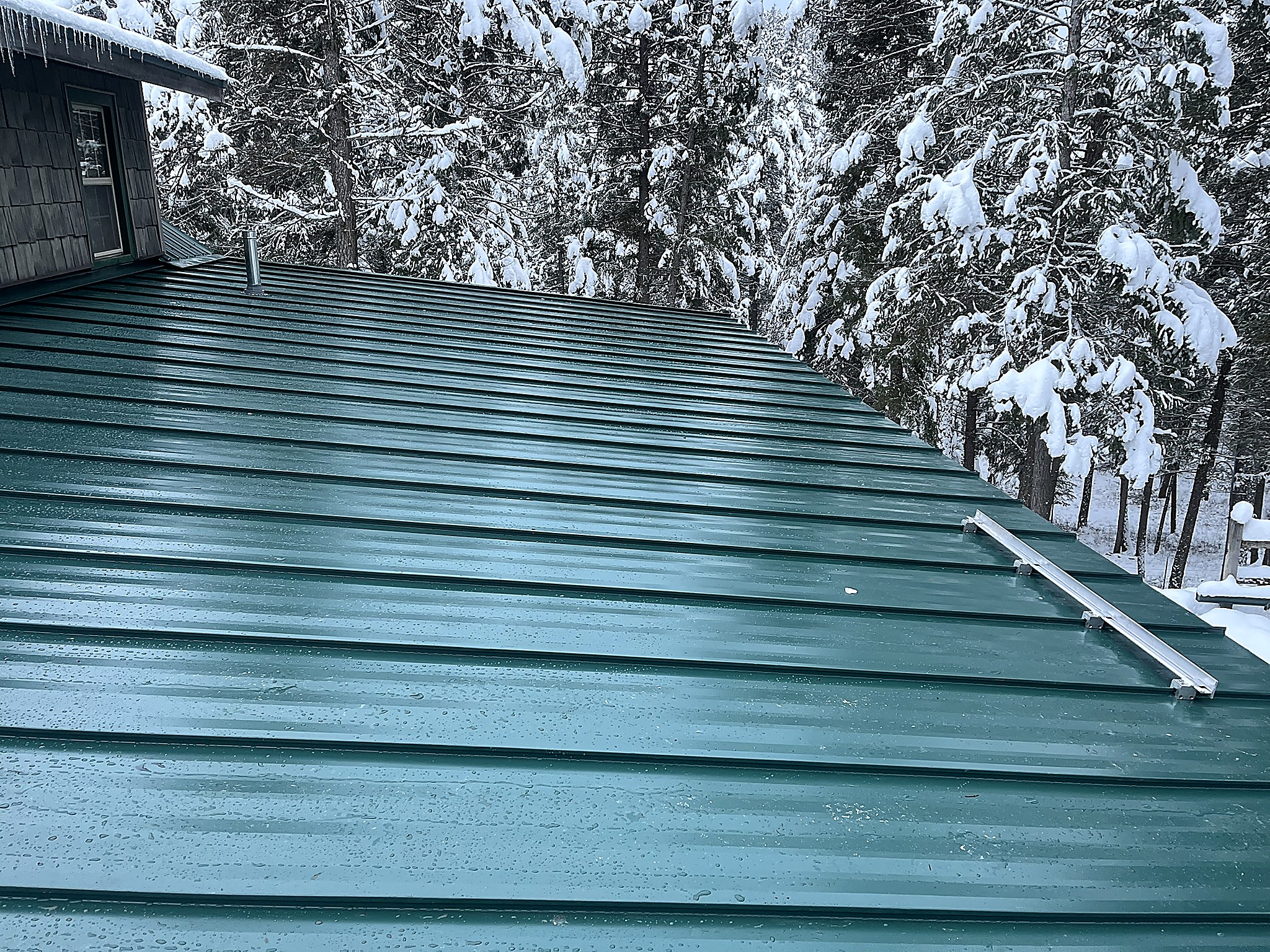
A metal roof is designed to shed. That smooth, low-friction surface is exactly what makes snow slide off it readily — especially on steeper pitches. That's a benefit when you're thinking about snow load, because the roof doesn't carry a full winter's accumulation. It's a serious problem when the shed happens all at once over a doorway.
An asphalt shingle roof is the opposite. The granular surface grips snow, so it tends to melt in place rather than slide. That's why snow retention is a metal-roof conversation, not an asphalt one. If you have a metal roof — standing seam or exposed-fastener — in this valley, retention belongs in the plan. See our standing seam metal roofing and exposed-fastener metal roofing pages for how each system pairs with it.
If it's metal and it's here, it needs retention.
What a roof avalanche actually damages
A sheet of snow and ice coming off a metal roof is heavy, fast, and unforgiving. It can tear gutters clean off the eaves, crush deck railings and snap deck boards, bury an entryway or walkway under several feet of packed snow, snap shrubs and break branches, and dent or total a vehicle parked below.
The worst of it is the risk to anyone standing underneath. A person caught under a roof avalanche can be badly hurt. This isn't a minor nuisance you clean up with a shovel — it's a real, avoidable hazard, and it's the reason snow retention exists.
Retention is cheaper than what it prevents.
Where snow retention belongs
Retention goes where the snow would land on something that can't take it. That means above doors and entries, above walkways and driveways, above decks and patios, above gas meters and HVAC equipment, and above anywhere people walk or vehicles park.
A roof slope that dumps snow onto an empty lawn is a lower priority. A roof slope that dumps snow onto the front entry, the back deck, or the driveway where the kids walk to the car is the one that needs retention. We look at what's below each slope and place retention where it actually protects something.
We protect what's under the roof, not just the roof.
The types — individual guards, continuous rail, and where each makes sense
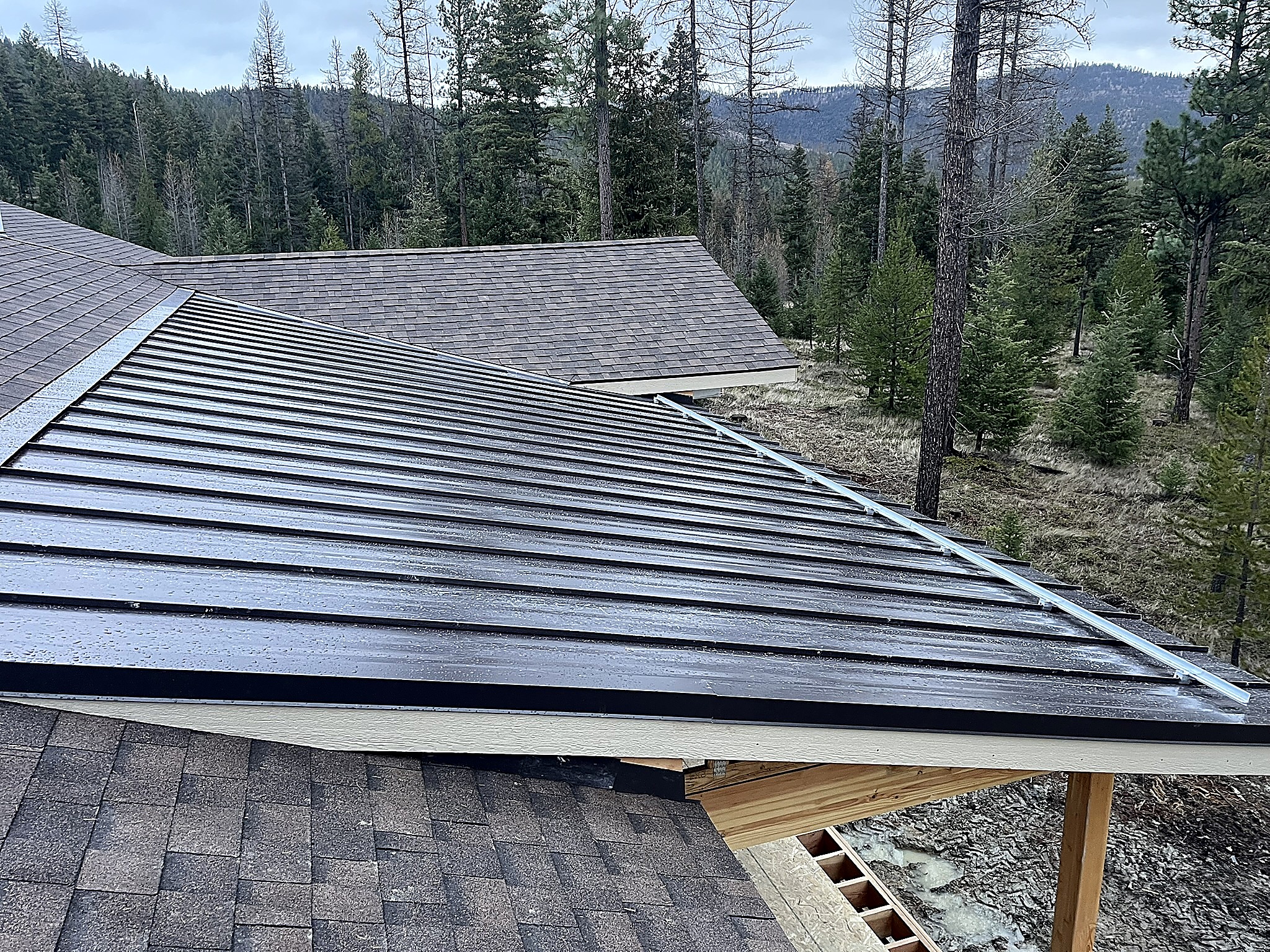
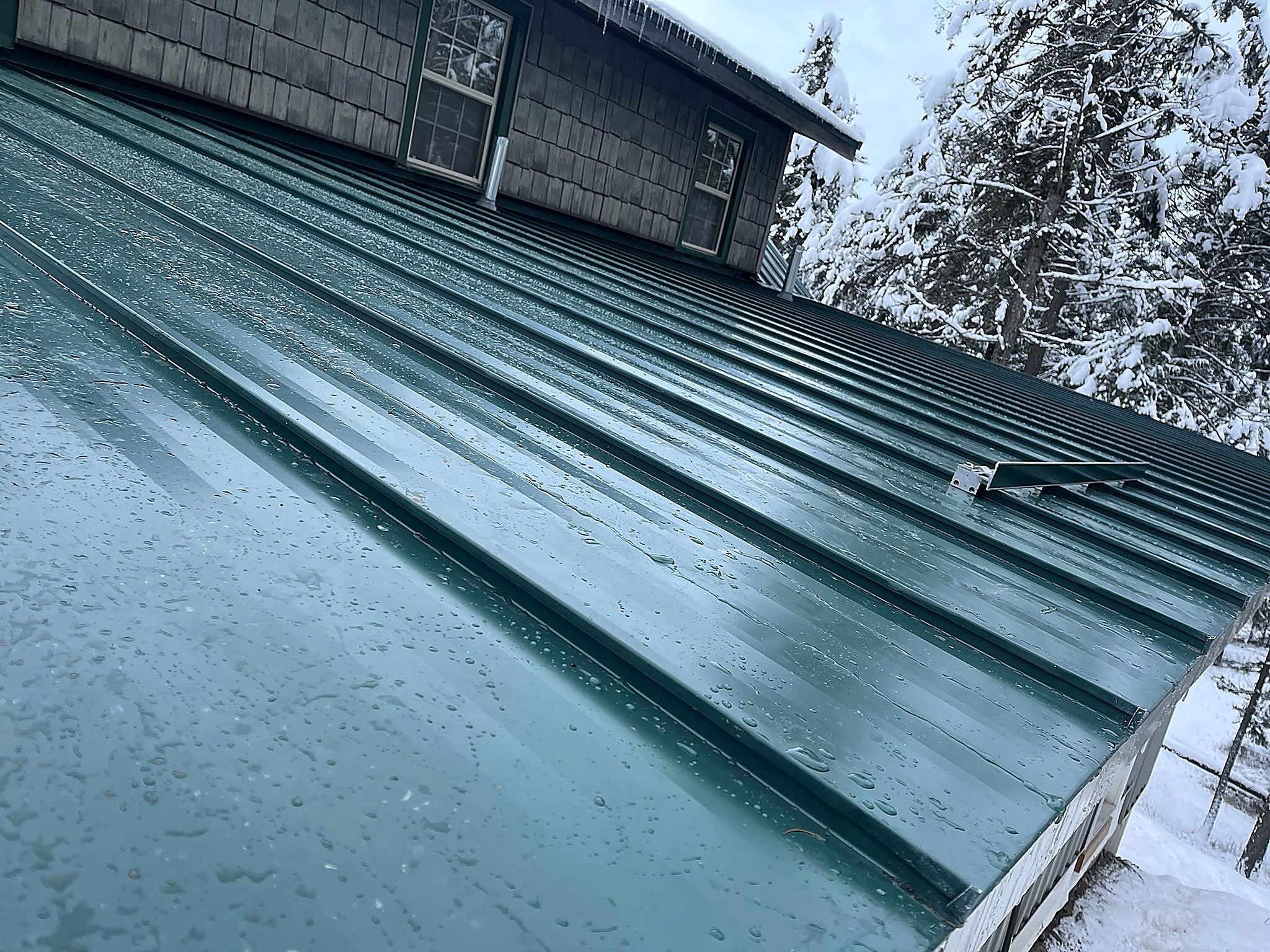
There are two broad approaches. Individual snow guards are discrete pieces spaced across the roof, each holding a pocket of snow. They work by breaking the snowpack into sections so it can't release as one sheet. Continuous snow fence or rail systems run the full width of the roof in one or more lines, holding a larger mass of snow behind them and letting it melt or shed in controlled amounts.
Which one makes sense depends on your roof's pitch, the panel type, the length of the roof from eave to ridge, and what's below it. A short, steep slope over a front entry may need a different solution than a long, lower slope over a driveway. This is not a matter of spacing guards evenly and hoping — the layout has to be designed for your specific roof, or it either doesn't hold enough snow or holds too much in the wrong place.
We design the layout to your roof, not a guess.
Why retrofitting costs more than planning it in from the start
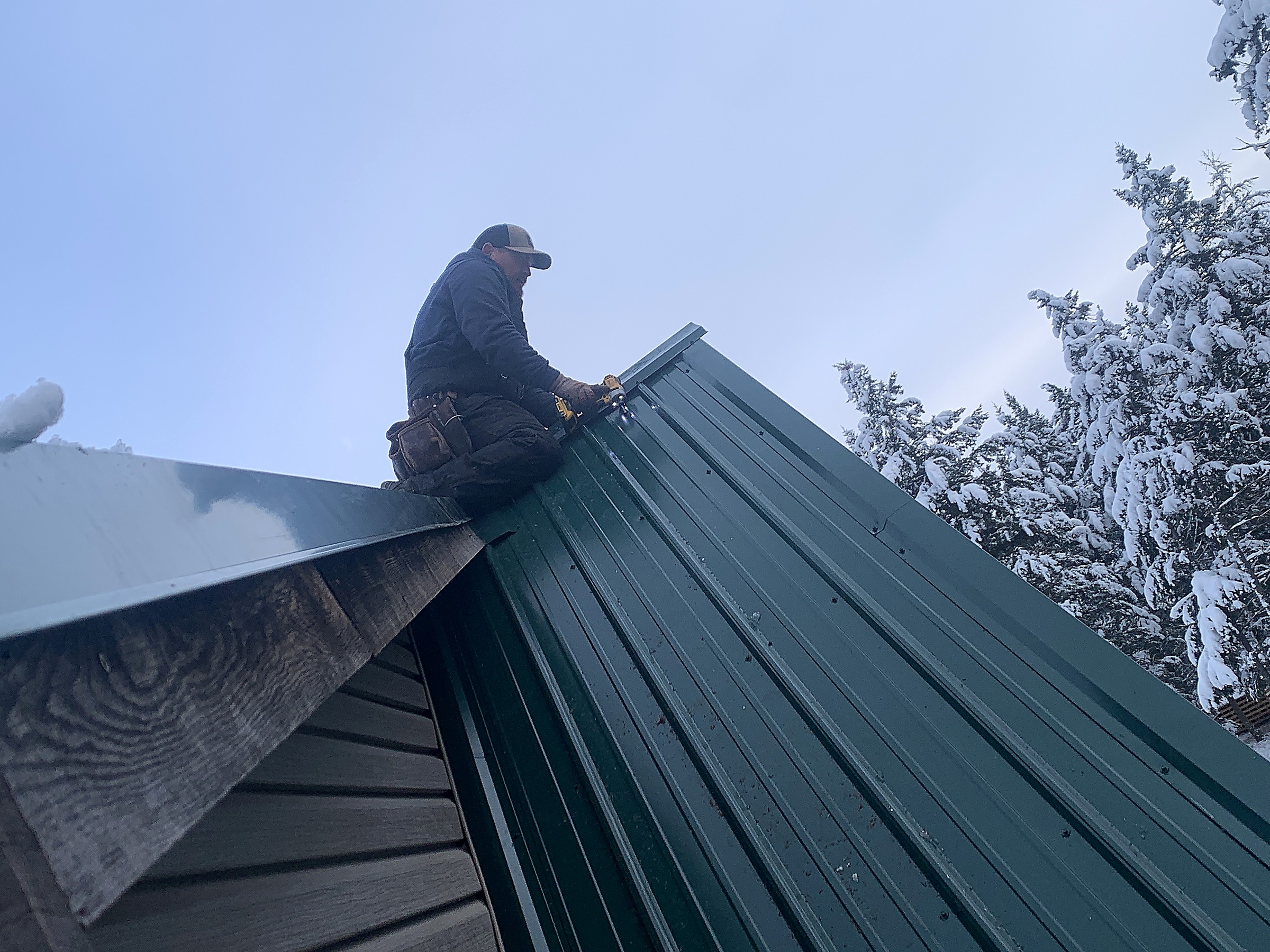
Snow retention is cheapest when it's part of the original metal roofing job. The crew is already on the roof, the panels are already exposed, and the layout gets designed into the install. On a standing seam roof, clamp-on guards attach to the seams without piercing the metal — but doing it later still means a separate trip, separate access, and separate labor. On an exposed-fastener roof, retrofitting means adding fasteners through the panel face, with the same gasket-and-washer considerations as the rest of the roof.
That's why snow retention should be part of the metal roofing conversation from the very start, not something added after the first winter teaches you why you needed it. If you're putting on a metal roof, plan the retention at the same time. If you already have a metal roof without it, we can add it — it just costs more than it would have.
Bring it up when you price the roof and it costs less.
Heat cable — what it does, and what it doesn't
Heat cable is a related tool, and it belongs in this conversation rather than as a separate service. It's a heated line run along the eaves and in the valleys that keeps a path clear so meltwater can drain instead of pooling and refreezing behind an ice dam. Where ice dams form, heat cable at the eaves and in the valleys can keep a channel open and let the water out.
Here's the honest part: heat cable manages a symptom, not the cause. The underlying cause of ice dams is almost always heat loss into the roof — warm air from the living space below melting the underside of the snow, which runs down and refreezes at the cold eave. That's an insulation and ventilation problem, and cable doesn't fix it. It keeps the water moving so it doesn't back up under the shingles, but it doesn't stop the melt from happening. For the fuller picture on ice dams and what actually causes them, see our ice dam page.
Cable buys you time; the fix is above the ceiling.
Why this matters in the Flathead Valley
We get real winters here. Snow comes and stays, freezes hold it on the roof for weeks at a time, and thaws release it. A metal roof in this valley without retention is a problem waiting for the right conditions — and the first time it slides is often the time someone is walking out the front door or standing on the deck.
We live and work here. We've seen what a roof avalanche does to a gutter, a railing, and a shrub bed, and we'd rather you not learn it the hard way. Planning snow retention into a metal roof from the start is simply how a metal roof gets done right in this country. Estimates are free, and we'll tell you honestly what your roof needs and what it doesn't.
Request a quote and we'll tell you what your roof actually needs.
Frequently asked
What does snow retention actually do?
It holds snow on the roof so it melts and sheds gradually, instead of releasing in one sliding sheet. A metal roof is built to shed — which is exactly the problem when that shedding happens all at once over a doorway. Snow guards and rail systems break up that release and hold the snow in place until it can melt off safely.
Does my asphalt shingle roof need snow retention?
Usually not. Asphalt shingles have a textured, granular surface that grips snow and holds it in place, so it tends to melt in place rather than slide. A metal roof is the opposite — smooth and low-friction, so snow releases readily. That's why snow retention is a metal-roof conversation, not an asphalt one.
What kind of damage can a roof avalanche actually cause?
A sheet of snow and ice coming off a roof can tear off gutters, crush deck railings, bury entryways and walkways, snap landscaping, dent vehicles parked below, and seriously injure anyone standing underneath. It's not a minor nuisance — it's a real hazard, and it's avoidable with properly placed retention.
Should I use individual snow guards or a continuous rail system?
It depends on your roof. Individual snow guards are spaced across the roof to hold snow in pockets; a continuous rail or fence system runs the width of the roof to hold a larger mass. Which makes sense depends on your roof's pitch, the panel type, the length of the roof, and what's below it. It is not a matter of spacing them evenly and hoping — the layout has to be designed for your roof.
Can snow retention be added to a metal roof that's already installed?
Yes, but it costs more than planning it into the original job. On an exposed-fastener roof, retrofitting means adding fasteners through the panel face. On a standing seam roof, clamp-on guards attach to the seams without piercing the metal, but the labor and access are still greater than doing it during the install. That's why snow retention should be part of the metal roofing conversation from the start, not an afterthought.
Does heat cable solve ice dam problems?
Heat cable manages a symptom — it keeps a path clear so meltwater can drain instead of pooling behind an ice dam. It helps at eaves and in valleys, but it doesn't solve the underlying cause, which is usually heat loss into the roof from inadequate insulation or ventilation. We'll be honest about that. See our ice dam page for the fuller picture.
Why does this matter so much in the Flathead Valley?
We get real winters here — sustained snow, freezes that hold it on the roof, and thaws that release it. A metal roof without retention in this valley is a problem waiting to happen, and the first time it slides is often the time someone is standing at the front door. Planning for it from the start is simply how a metal roof gets done right here.
Where we work
Serving the Flathead Valley
From Kalispell to West Glacier. Pan and zoom to see your town.
Free estimate
Let's look at your roof
Send a few details and we'll get back to you during office hours. You'll talk to Tessa & Joseph Stremel — not a salesperson. Free estimates, no obligation.
Prefer to call?
(406) 260-5284